
Nash County Warrant Channels
No official Nash County online active-warrant search portal was located in the research. The Sheriff's Office maintains a Most Wanted Suspects page, but that page is not a complete active-warrant database. The Patrol Division serves criminal papers, including warrants and orders for arrest, while the Civil Division handles civil process, courthouse security, bailiffs, evictions, foreclosures, executions, and related civil enforcement. Warrant existence and case context can also involve the Clerk of Superior Court, magistrates, Portal case records, and court hearing information.
That split matters. A sheriff record may show service or law enforcement action. A court file may show the criminal case, failure to appear, bond, disposition, or recall. A magistrate may be involved in warrants and pretrial release. Search warrants may be sealed for a time. No single public page was verified as a full Nash County active-warrant list, so the best search method is to combine official channels and avoid treating third-party warrant pages as proof.
The Nash County Sheriff's Civil Division source documents civil process, bailiff, courthouse security, and execution functions connected to sheriff enforcement work.
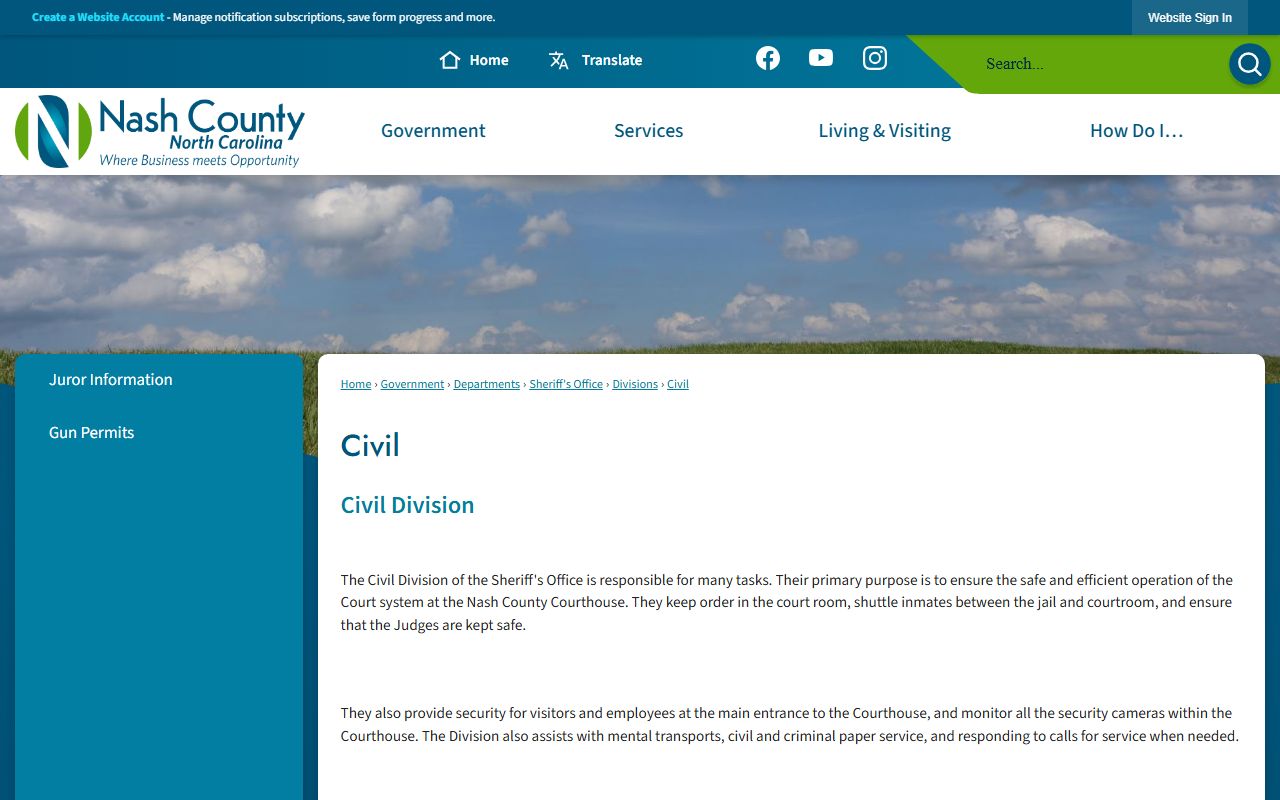
The civil division source helps distinguish criminal warrants from civil process that the Sheriff's Office also serves.
Nash County Warrant Types
Warrant-related records are not all the same kind of document. Some authorize an arrest. Some are tied to missed court, probation, contempt, or noncompliance. Some authorize a search and may not be public until a later stage. Others are civil enforcement papers that are served by the Sheriff's Office but are not criminal arrest warrants. Use the document name, issuing authority, case number, and status before deciding what action is needed.
- Arrest warrant - A criminal process issued on probable cause for an alleged offense.
- Bench warrant or order for arrest - Often follows failure to appear, probation violation, contempt, or failure to comply with a court order.
- Search warrant - Authorizes a search of a person, place, or item and may remain sealed temporarily.
- Fugitive or extradition warrant - Relates to wanted status from another county or state.
- Civil process - Includes writs, evictions, foreclosures, executions, and tax warrants, but is not the same as a criminal arrest warrant.
The Nash County Sheriff's divisions source identifies patrol and other divisions tied to service of criminal papers and public safety work.
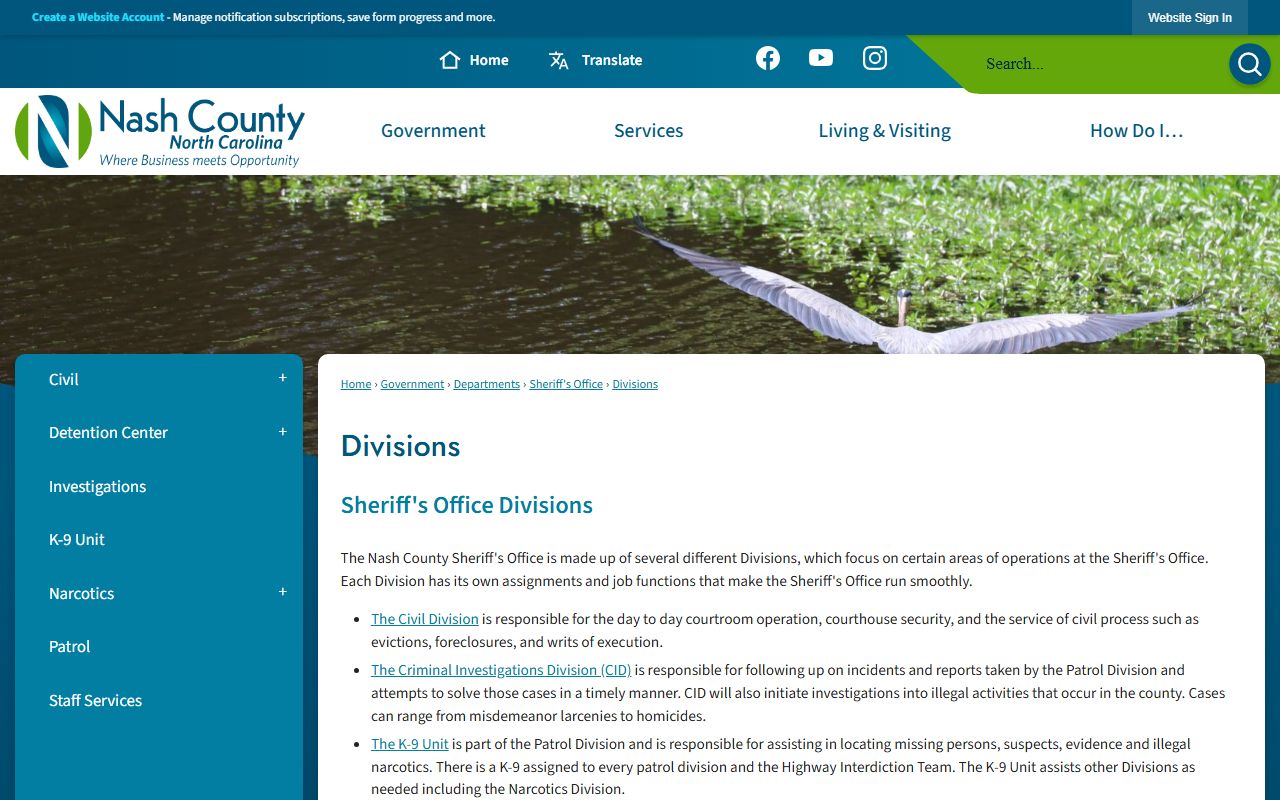
Division details show why warrant research may involve patrol, civil process, detention, and court channels instead of one public search page.
Search Nash County Warrants
A practical Nash County warrant search starts with the question being asked. If the concern is a public court case, use Portal and the Clerk of Superior Court. If the concern is sheriff service, most wanted information, or surrender logistics, use the Sheriff's Office. If the concern is a missed court date or order for arrest, the clerk and magistrate numbers are more relevant than a general web search. If the person has already been arrested, the detention facility handles custody status.
- Check the Sheriff's Most Wanted Suspects page for public wanted notices, while remembering it is not a full warrant database.
- Search Portal or hearing records for related criminal case numbers, court dates, failures to appear, orders for arrest, and dispositions when public.
- Call the Clerk of Superior Court at 252-220-3000 for case-file, court-date, and background-search questions.
- Call Nashville magistrates at 252-220-3019 or Rocky Mount magistrates at 252-212-3119 for proper procedural questions.
- Use the Sheriff's Office non-emergency number, 252-459-4121, for sheriff contact, tips, and appropriate surrender logistics.
- Request warrant-service or incident records from the Sheriff's Office when the record is a law enforcement record, subject to redaction.
Nash County Warrant Search Fields
The research did not identify a structured Nash County active-warrant search form with public input fields. Instead, warrant search fields come from the official channels used to verify related information. Most wanted pages may use names and descriptions. Portal and clerk channels use case numbers, party names, citation numbers, dates, and court events. Sheriff's records requests need enough identifiers to locate service records without guessing.
| Field Label | Type | Required | Notes |
|---|---|---|---|
| Name or alias | Text | Primary | Needed for sheriff, most wanted, clerk, and court searches. |
| Date of birth or age | Date / text | Helpful | May be partial or restricted in public views. |
| Case number | Text | Helpful | Use for Portal, clerk, hearing, and court-file lookup. |
| Warrant or order number | Text | Helpful if known | May appear in court or law enforcement records. |
| Charge or offense | Text | Helpful | Offense description can separate similar names. |
| Issuing court or magistrate | Office / court | Helpful | Shows whether the record is a District Court, Superior Court, or magistrate matter. |
The Nash County Most Wanted Suspects source is an official public wanted notice channel, not a complete active-warrant search portal.
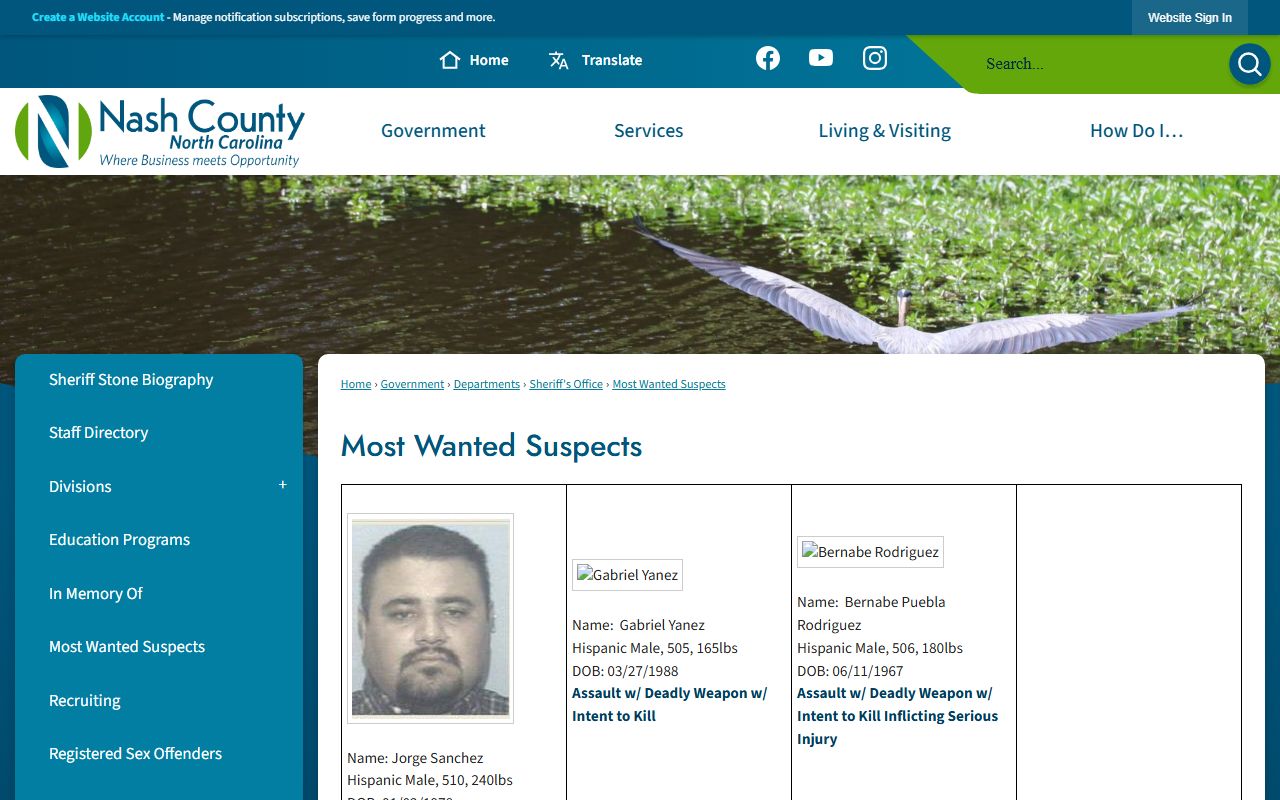
The most wanted source can provide leads and contact direction, but it does not replace clerk, magistrate, or sheriff verification.
Nash County Warrant Details
A warrant record should be read as a status-sensitive record. A record can be active, served, recalled, disposed, sealed, or unknown in a public view. A court case may still show a past order for arrest after the person has appeared, and a law enforcement record may not explain the final court disposition. Ask for written proof after recall, compliance, surrender, or disposition when the status matters for employment, licensing, travel, or future court appearances.
| Field | What It Shows |
|---|---|
| Name / aliases | Person identified in the most wanted notice, court file, or sheriff record. |
| Date of birth / age | Identity marker that may be limited in public views. |
| Charge / offense | Alleged offense or related statute description. |
| Case number / file number | Identifier for Portal, clerk, or hearing lookup. |
| Warrant or order number | Identifier used in court or law enforcement documents when released. |
| Issuing court / magistrate | Shows the office or court tied to issuance. |
| Bond / release condition | Release terms set by a magistrate or judge. |
| Court date | Next scheduled hearing or appearance when public. |
| Status | Active, served, recalled, disposed, sealed, or unknown. |
Handle Nash County Warrants
Anyone who may have an outstanding warrant should confirm through official channels before taking action. Do not rely on unofficial warrant sites, social media posts, or old docket entries. If the matter could result in arrest, contact an attorney before appearing at a law enforcement office or courthouse. Bring identification, case paperwork, proof of compliance, and any notice received from the court. After a warrant is recalled, served, or resolved, request written proof from the court or agency that handled the action.
Important: A public search result is not legal advice, and surrender plans should be discussed with counsel when arrest is possible.
Failure-to-appear traffic matters may have their own path. The North Carolina traffic help source says a person may request a new court date through the clerk in some missed-court situations, particularly if no order for arrest was issued. A judge may need proof of the reason for missing court before striking a failure to appear or resetting the case.
Nash County Tips and Apps
The Sheriff's Most Wanted page says the public can contact 252-459-4121 if they know where a subject can be located, and callers can remain anonymous. The Sheriff's page also says anonymous tips may be submitted for past or ongoing criminal activity, but the tip link is not for crimes in progress. Emergency or crimes-in-progress situations should use 911. Tip channels are for public safety information. They are not a substitute for clearing a personal warrant.
The Nash County Sheriff NC app and the Rocky Mount PD app were documented as communication, crime-reporting, anonymous-tip, alert, public safety news, and information tools. No official app-store text in the research advertised a warrant lookup or app-only active-warrant feature. The app should therefore be described as a tip and public-safety channel, not as a verified Nash County warrant search database.
The Nash County Sheriff Google Play listing documents the sheriff app as a communication and public safety information tool.
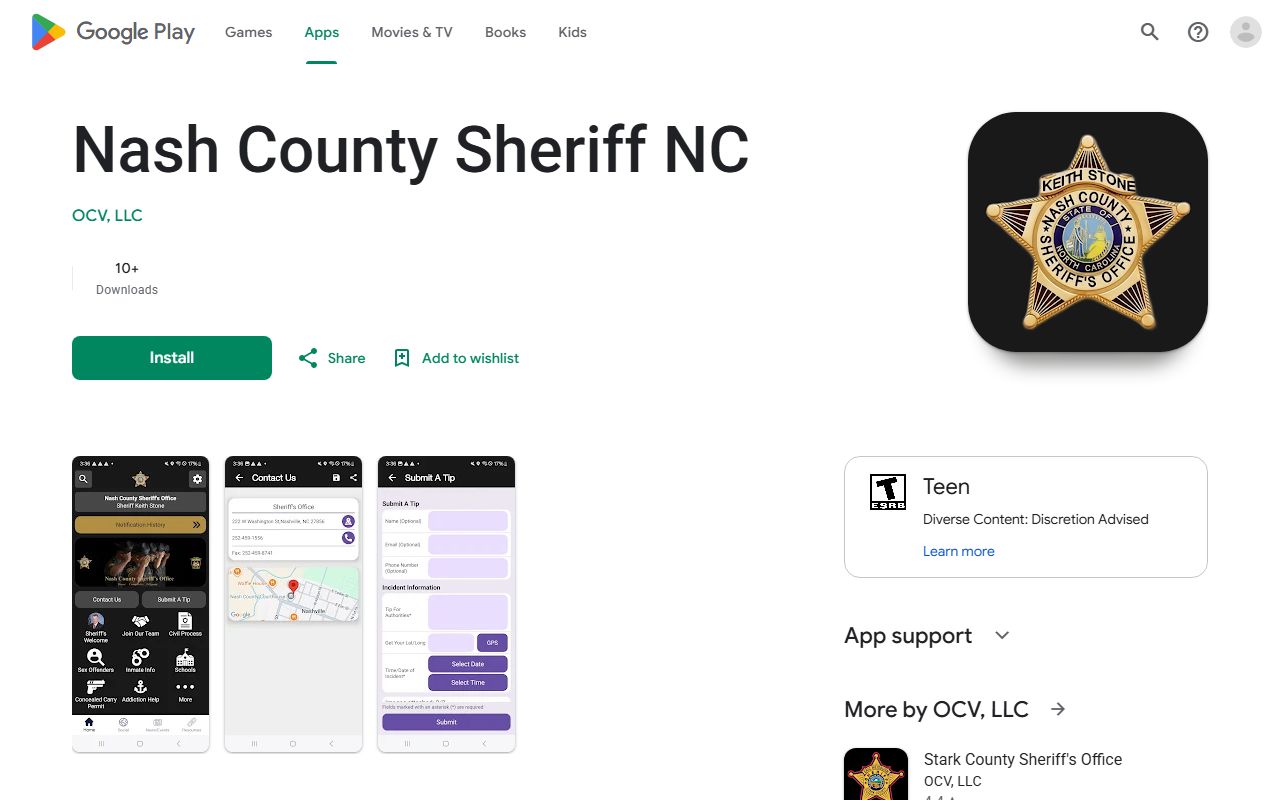
The app listing supports mentioning sheriff tips and alerts, but it does not support claiming an app-only warrant search.
Related Nash County Public Safety Records
Sex offender records are separate from warrant records, but they often appear near warrant and sheriff research because they are maintained through law enforcement channels. The Nash County registered sex offender page says investigations deputies maintain and verify registered sex offenders in the county, contact offenders at least once every three months, and reported approximately 160 registered offenders, with numbers changing monthly. The official statewide search is the North Carolina SBI registry.
The Nash County registered sex offender source explains sheriff verification work and the county's approximate registered-offender count.
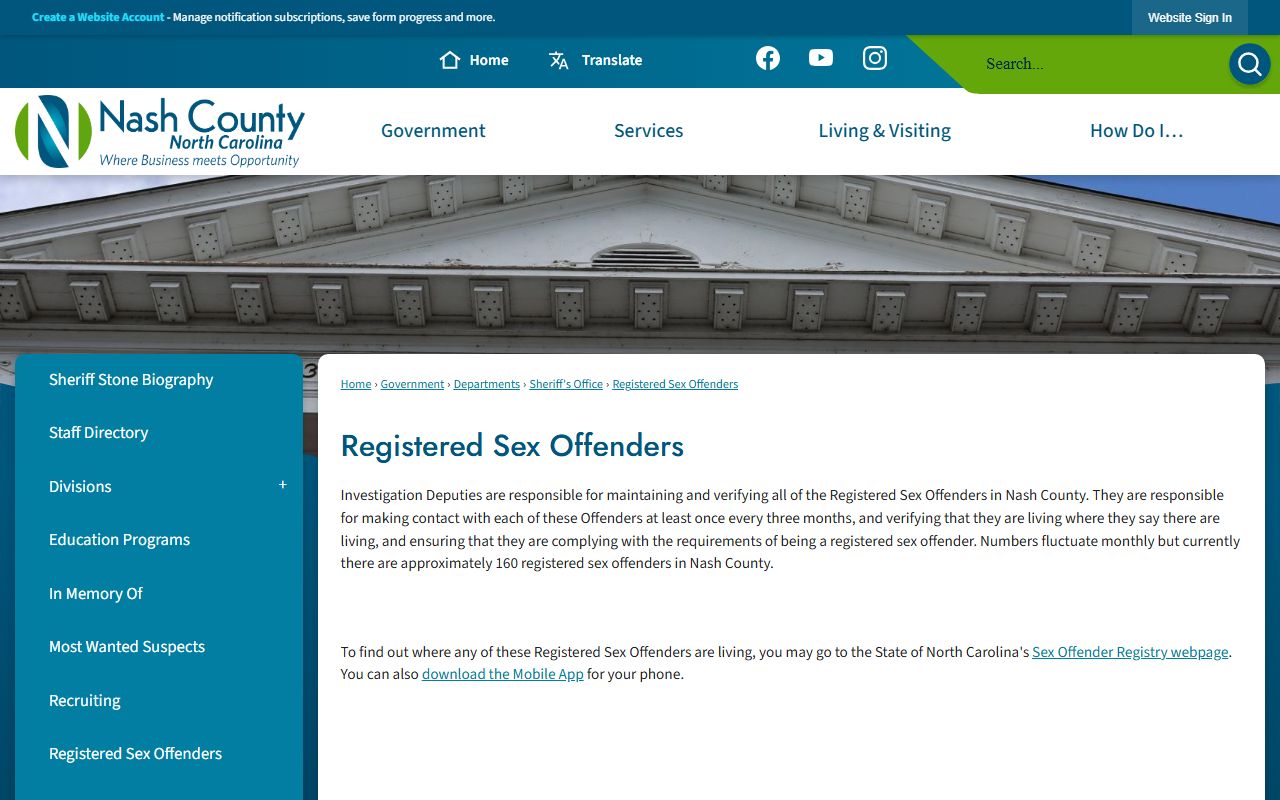
The county sex offender page is relevant to sheriff record channels, but it should not be merged with warrant status.
The North Carolina SBI sex offender registry is the official statewide registry search channel.
The SBI registry image closes the distinction between sex offender registry lookup and Nash County warrant verification.
Restricted Nash County Warrants
Not all warrant material is public. Search warrants may be sealed while an investigation is active. Juvenile matters and confidential case types may be restricted by statute. Expunged or sealed criminal matters should not be treated as ordinary public records. Protected personal information can also be redacted from released records. For court case files, the Clerk of Superior Court is the local recordkeeper. For sheriff service records, incident records, or enforcement records, the Sheriff's Office is the proper request path, subject to North Carolina public-record limits.
Statewide public active-warrant access was not verified. Law enforcement eWarrants, NCIC-type systems, and similar databases are not public search tools for ordinary users. Note: A clear Nash County warrant check usually requires more than one official source because sheriff service status and court case status answer different questions.