
Nash County Criminal Court Records
A criminal court record is the court case file, not just the arrest. It begins when a charge is filed or presented in the court system and grows as the case moves through appearances, pretrial release, motions, pleas, trial settings, judgments, sentencing, costs, and supervision terms. The Clerk of Superior Court is the recordkeeper for Nash County criminal files in both Superior Court and District Court. A person researching the narrower charge list after an arrest may also need the Nash County arrest records and court charges page, while this page stays centered on the full criminal case file.
North Carolina's trial courts are state-operated. In Nash County, Superior Court District 8A handles felony trial matters, while District Court District 8 handles misdemeanors, infractions, preliminary felony proceedings, and traffic matters that are criminal or infraction based. Magistrates are part of District Court and may handle warrants, initial proceedings, and pretrial release. The District Attorney for Prosecutorial District 8 prosecutes state criminal cases across Edgecombe, Nash, and Wilson counties.
Search Nash County Criminal Court Records
Use the NC eCourts Portal for public criminal case information. Smart Search includes Criminal Actions as an advanced filtering option under official training guidance. Search Hearings can be used when the immediate question is a criminal court date. NC Judgment Search can identify judgment index information, but the criminal case summary should be reviewed through Smart Search when it is available.
- Open Portal and choose Smart Search for criminal case information.
- Use Nash County as the location filter when the interface offers that field.
- Search by defendant name, case number, or citation number when relevant.
- Open the case summary and review charges, hearing events, disposition, judgment, and costs.
- Use Search Hearings for date, courtroom, judicial officer, attorney, or party-based hearing searches.
- Request a certified copy or clerk background search from the Nash County Clerk of Superior Court when an official record is needed.
State custody and correction data is separate. The NC Department of Adult Correction offender search covers state prisoners, probationers, and parolees by name or offender ID. It does not replace a Nash County criminal court record.
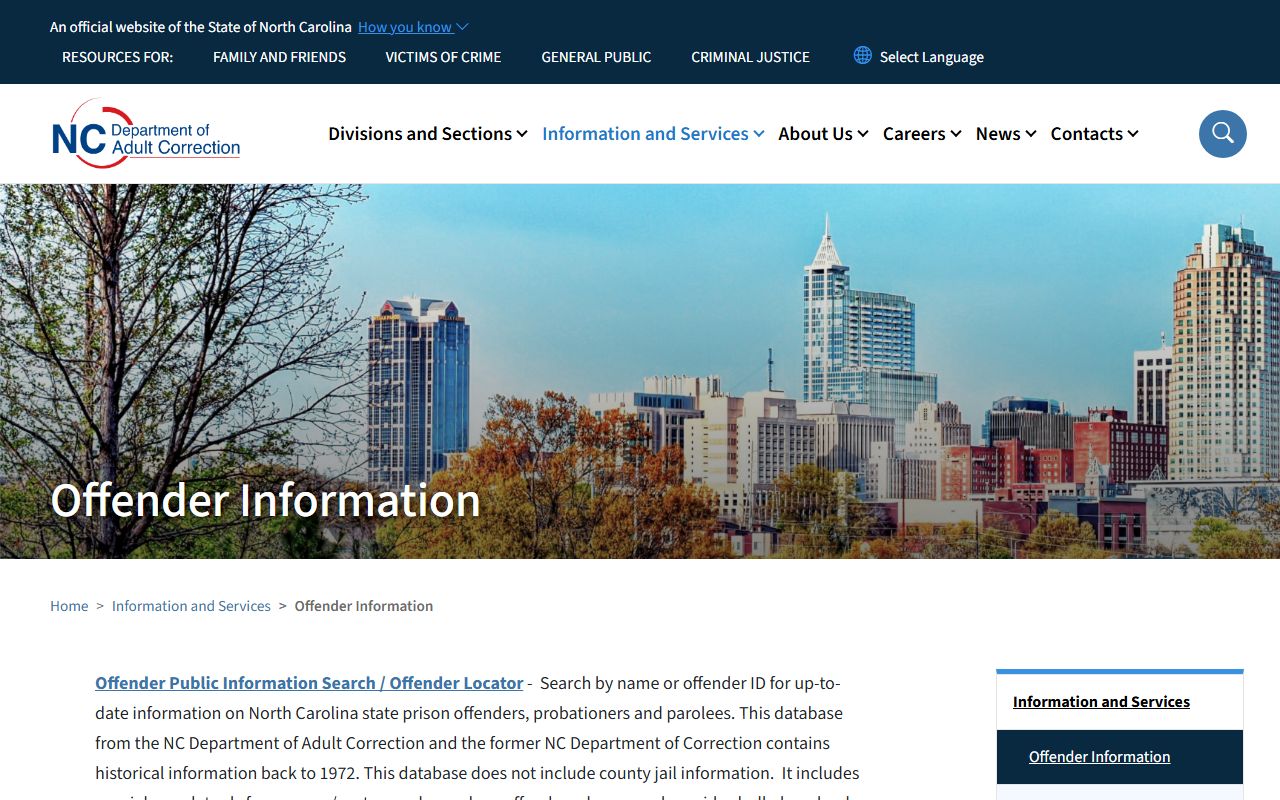
DAC results can help with post-sentence custody or supervision questions, but the court file is still searched through Portal and the clerk.
Nash County Criminal Case Stages
A Nash County criminal case changes as it moves through court. Early entries may show the charge, warrant, order for arrest, bond, or first setting. Later entries may show motions, continuances, plea events, trial settings, judgment, sentence, costs, restitution, and probation terms. A dismissed charge can still appear in the case history until it is expunged or sealed under law.
Case flow: Charges Filed › First Appearance or Arraignment › Pretrial and Motions › Plea or Trial › Disposition › Sentencing
| Stage | What the record can show |
|---|---|
| Charges filed | Offense description, statute reference, charging document, warrant or order number, and arresting agency when shown. |
| First appearance or arraignment | Initial court event, bond or release conditions, counsel status, and next date. |
| Pretrial and motions | Continuances, motions, orders, discovery-related events, and calendar settings. |
| Plea or trial | Plea entry, trial result, not guilty finding, guilty finding, or other outcome. |
| Disposition | Dismissed, guilty, not guilty, judgment entered, or other final status. |
| Sentencing | Sentence, probation, restitution, fines, fees, costs, or supervision obligations. |
Nash County Criminal Record Fields
The public court file can be read field by field. A case number ties the online result to the clerk's file. Party names identify the defendant and sometimes other parties. Charge fields state the alleged offense and may include statute references. Docket entries show each court event. Disposition and sentence fields show what the court did with the charge. Financial fields can include costs, restitution, attorney fees, and probation or parole fee obligations.
| Field | What It Shows |
|---|---|
| Case number | The criminal court identifier for Portal, calendars, and clerk requests. |
| Defendant | The person charged in the criminal case. |
| Charge or offense | The alleged offense, statute reference, severity level, or offense description. |
| Bond or pretrial release | Release terms such as secured bond, unsecured bond, or written promise when public. |
| Hearing dates | Court settings, courtroom, judicial officer, and hearing history when available. |
| Motions and orders | Requests and court rulings that move the case toward disposition. |
| Plea | The defendant's formal answer to a charge. |
| Disposition | The outcome, such as dismissed, guilty, not guilty, or judgment entered. |
| Sentence | Punishment, probation, restitution, fines, fees, court costs, or other terms. |
Nash County Charges vs Convictions
A charge is an accusation. A conviction is an outcome after a guilty plea, guilty finding, or verdict. Nash County criminal court records can show both, and they can also show charges that were amended, reduced, dismissed, or ended in a not guilty finding. Reading only the charge title without the disposition can give the wrong impression of the case.
| Point | Charge | Conviction |
|---|---|---|
| Meaning | An accusation filed in court. | A final guilty outcome by plea, finding, or verdict. |
| Timing | Appears early in the case. | Appears after plea, trial, or judgment. |
| Can change | May be amended, reduced, added, dismissed, or dropped. | May be affected by appeal, post-conviction relief, or expunction eligibility. |
| Best field to check | Charge list and docket history. | Disposition, judgment, sentence, and costs. |
The NC Courts expunction help topic explains that expunction can remove a charge or conviction from a person's record and seal or destroy state records when the law permits.
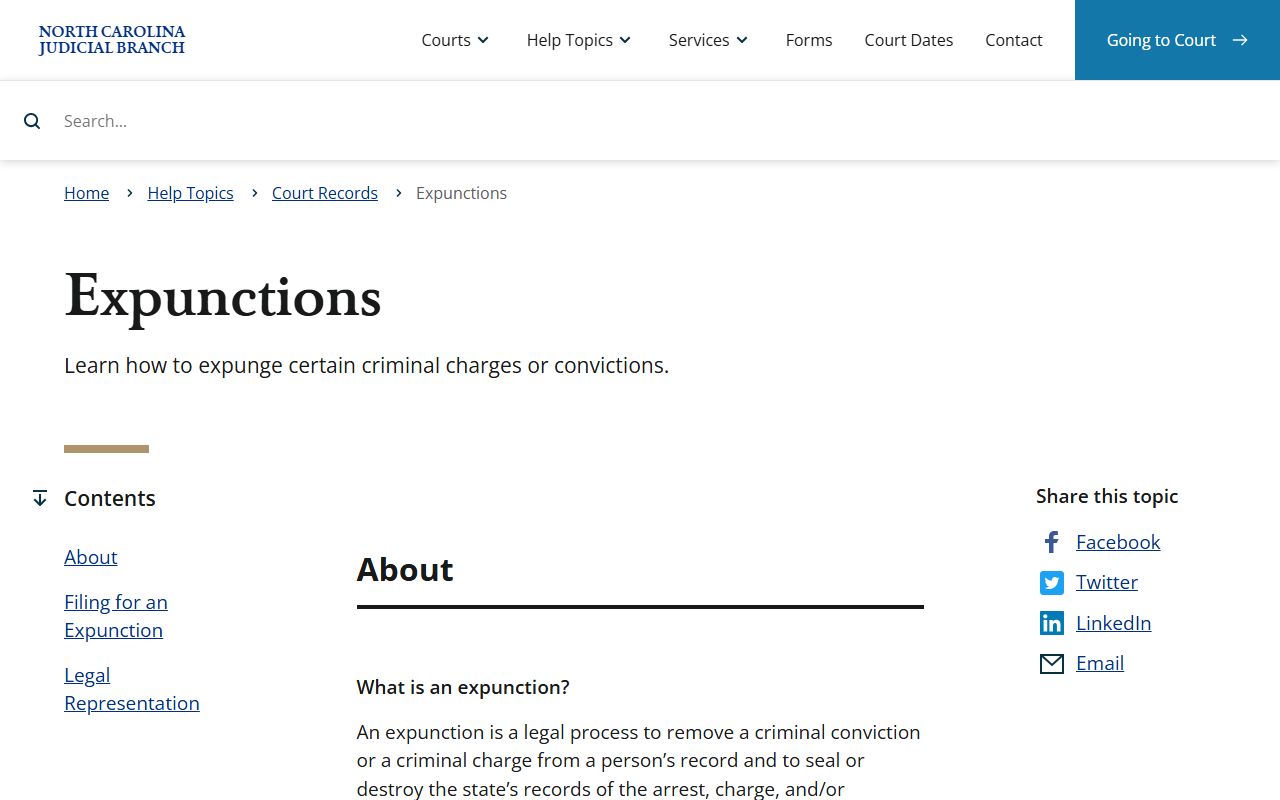
That is why dismissed or older criminal entries may require an expunction analysis instead of a simple Portal lookup.
Nash County Criminal Court Access
Public access to Nash County criminal court records rests on both public-record and court-record statutes. G.S. 132-1 defines public records broadly. G.S. 7A-109 requires clerks to maintain records, files, dockets, and indexes, and allows public inspection except where prohibited by law. The same statute also supports remote electronic access contracts, which explains the Remote Public Access Program for licensed statewide criminal and civil court data users.
The District Attorney's Office decides how state prosecutions proceed in court, including dismissals, reductions, pleas, indictments, and trial calendars. The Nash County contact directory lists the District Attorney phone as (252) 212-3110. NC Indigent Defense Services lists Nash County in Defender District 7 and tells people asking whether they have a lawyer to contact the Clerk of Superior Court at (252) 220-3000. Victims and parties can use Portal, VINE for custody notification when relevant, the DA, and the clerk depending on the question.
The NC DAC public records online page is a state correction-record route, not a county criminal case-file request route.
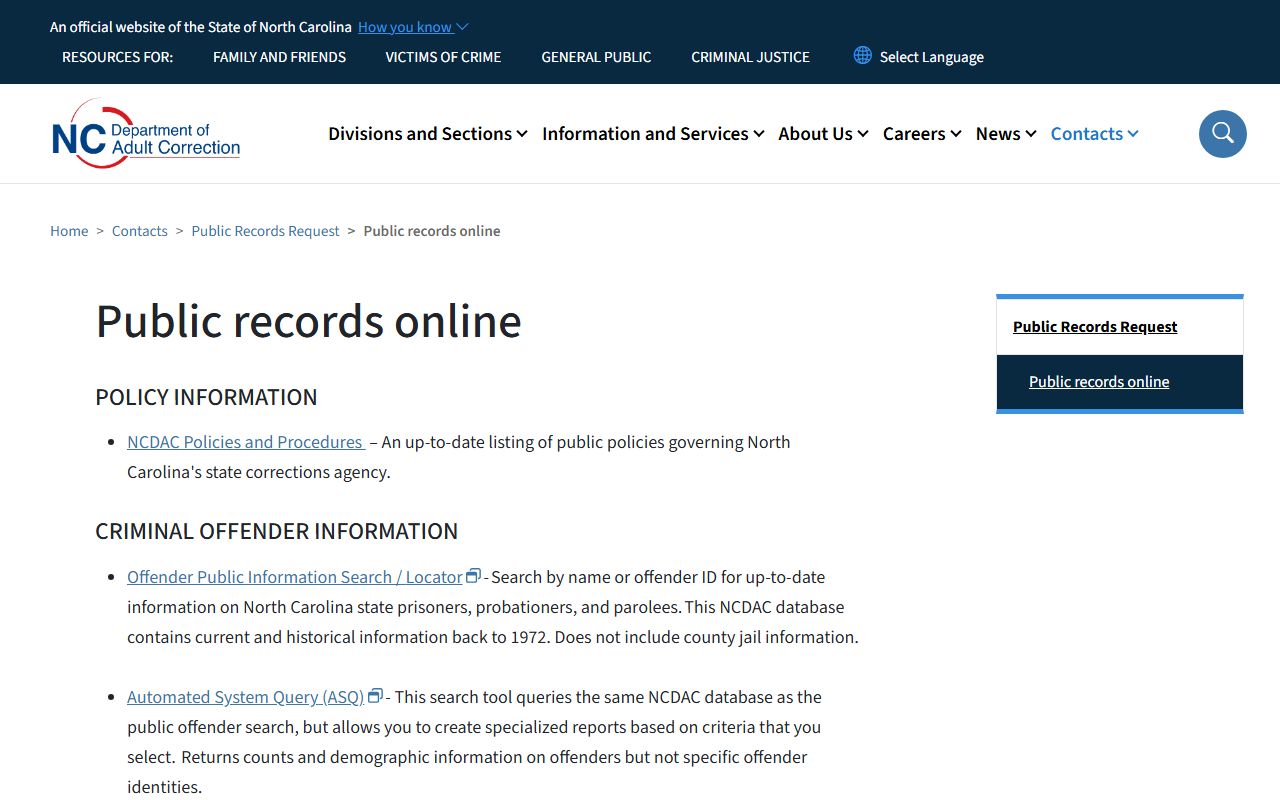
Use it for state correction public information, and use the Nash County clerk for the criminal court file.
Sealed and Expunged Criminal Records
Sealed and expunged records are not the same. A sealed record is hidden from ordinary public access by law or court order. An expunged record is removed from public access and may be sealed or destroyed so the arrest, charge, or conviction is not visible in the usual public search. Juvenile delinquency records are confidential under Chapter 7B, and public searches should not be expected to reveal juvenile criminal files.
| Point | Sealed | Expunged |
|---|---|---|
| Public visibility | Hidden from ordinary public access. | Removed from public record access after the order is granted. |
| Legal basis | Statute or court order. | North Carolina expunction statutes and court order. |
| Common examples | Juvenile, confidential, or safety-sensitive records. | Dismissed charges, not guilty findings, and qualifying nonviolent convictions. |
| Where to ask | Clerk or court with authority over access. | Clerk in the county where the charge or conviction occurred. |
The dismissed-charge and not-guilty expunction statute is G.S. 15A-146.
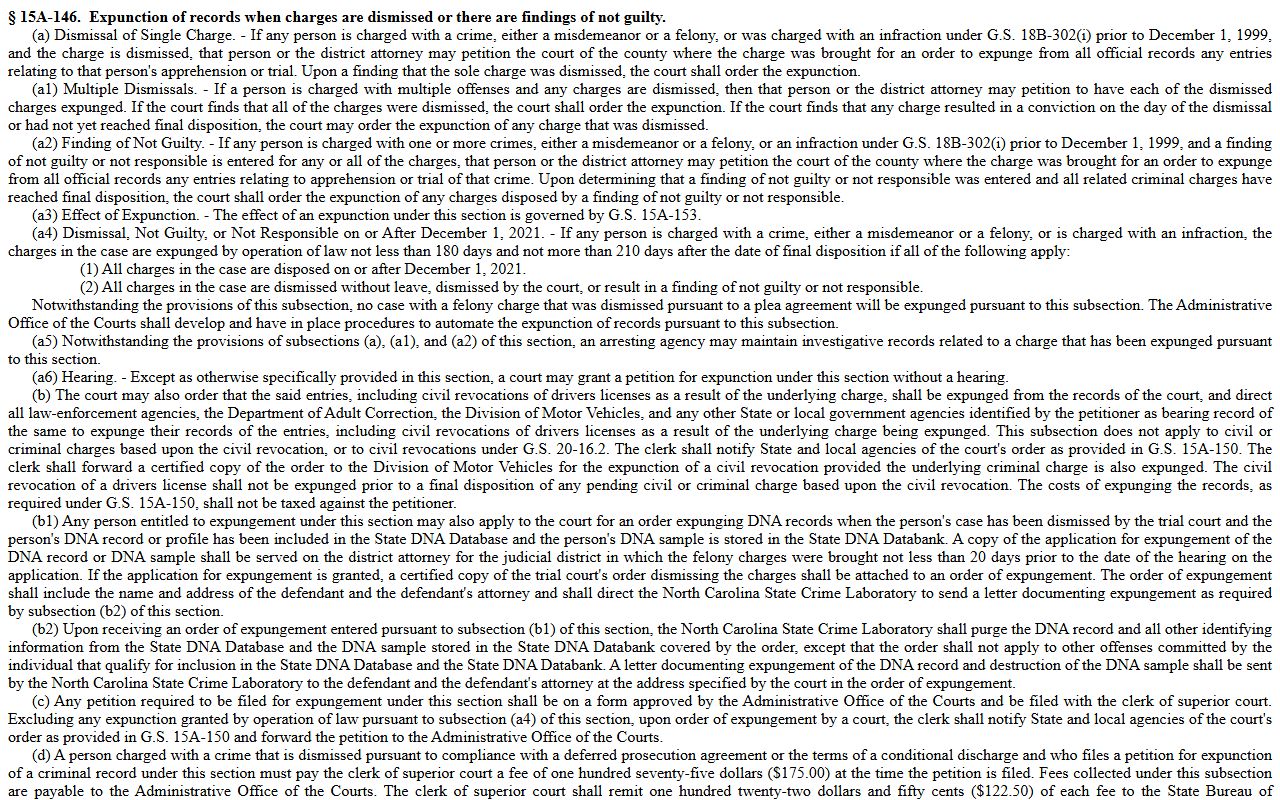
That statute is relevant when the criminal case ended without a conviction and the person seeks removal from public record access.
For certain nonviolent misdemeanor and felony convictions, the controlling statute is G.S. 15A-145.5.
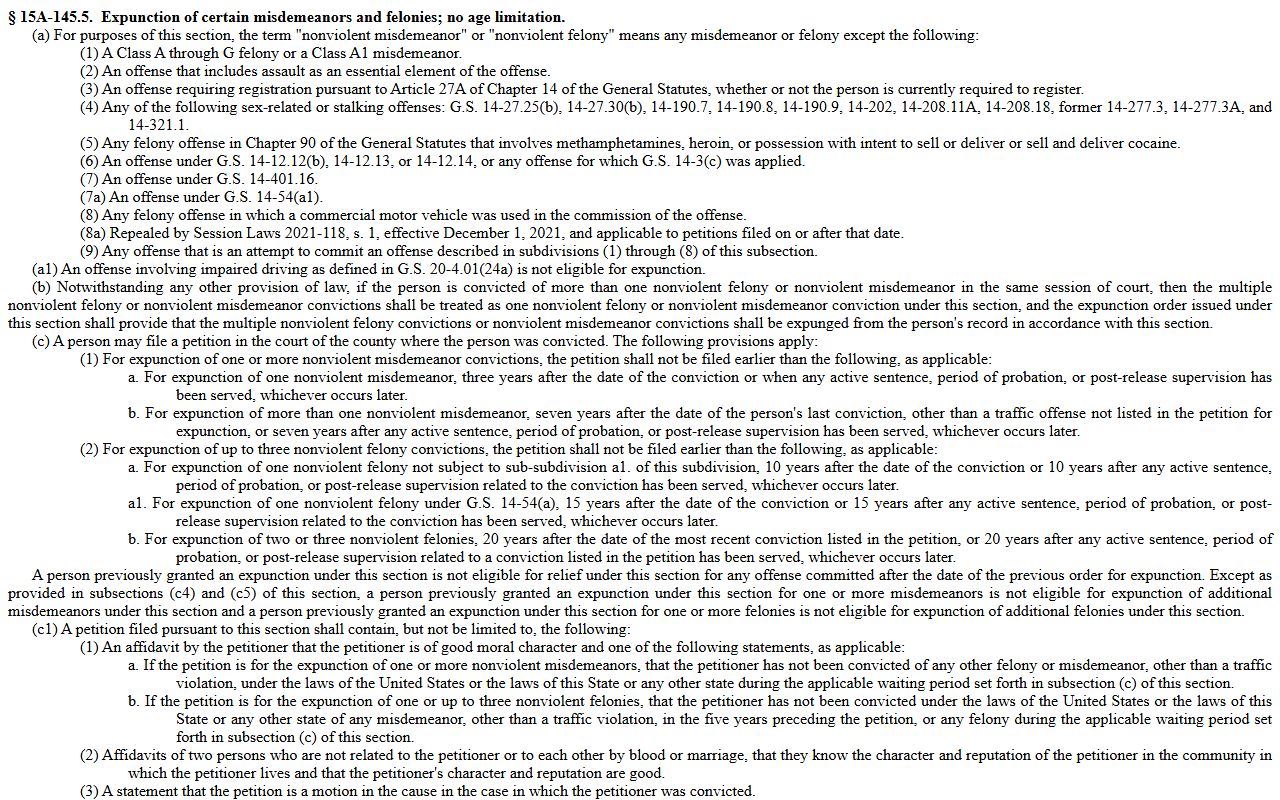
The research notes waiting periods that include three years for one nonviolent misdemeanor, seven years for more than one nonviolent misdemeanor, ten years for one qualifying nonviolent felony, and longer periods for certain or multiple felonies.
Custody After Nash County Criminal Court
A sentence or custody status is not always a court-record issue. The court file can show sentence terms, probation, restitution, and costs, but jail custody and state prison status use different sources. Nash County's Detention Facility handles county pretrial detainees, newly booked arrestees, and short-term local inmates. State prisoners, probationers, and parolees are searched through NC DAC. VINE can be used for custody notification where supported.
The Nash Correctional Institution page is a state prison source for a facility in Nash County, not a county clerk criminal case file.
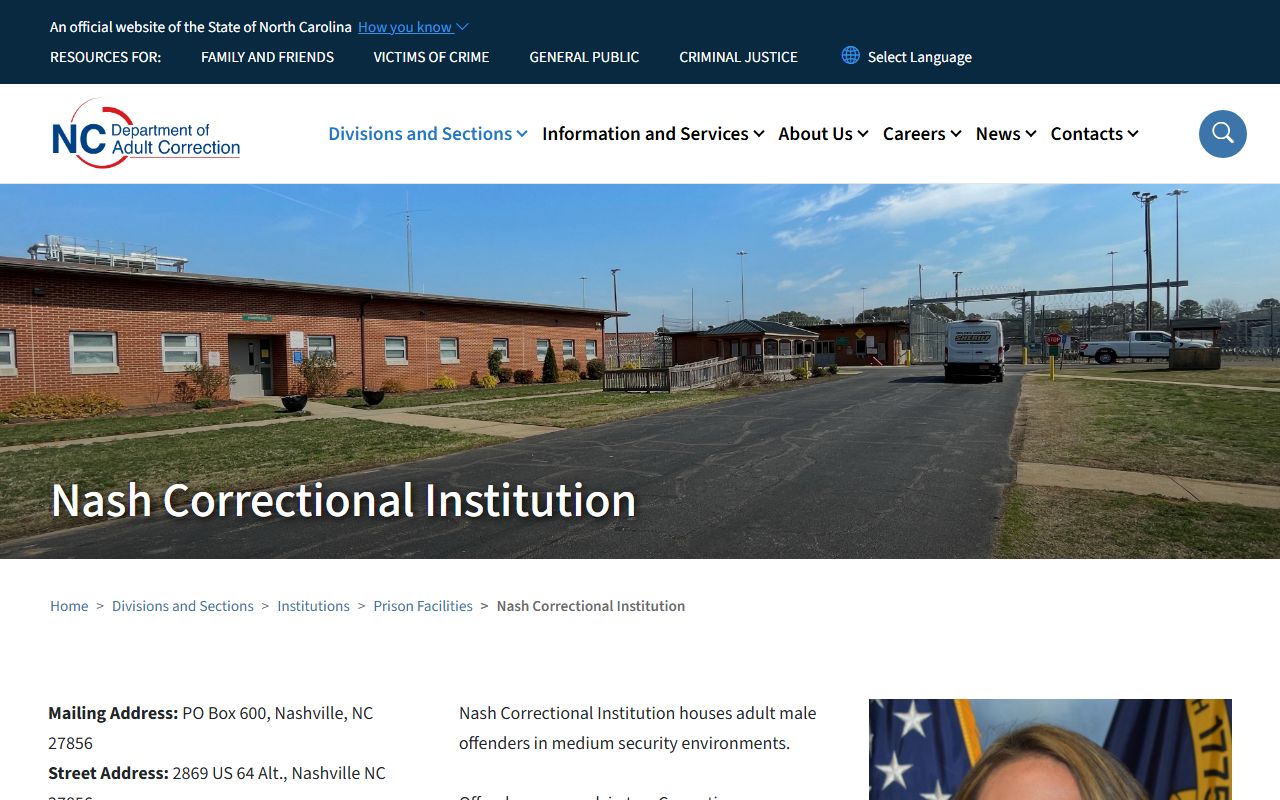
Use the court record for the judgment and sentence, then use custody sources when the question is where a person is held or supervised.
Important: Criminal court records are not consumer reports and should not be used for FCRA-regulated screening decisions.