
Nash County Arrest Records and Court Charges
An arrest record is the law enforcement record of the arrest or booking event. It can involve the arresting agency, alleged offense, date, custody status, bond or release information, and detention details that are public after redaction. A court charge record is narrower and more court-centered. It shows the offense filed in court, the charge level, the charging instrument, the case number, court date, bond or pretrial release entry, and later changes to the charge. For custody and booking questions, use jail sources; for the complete case outcome, use the criminal court case file.
Nash County official detention pages provide facility policies and phone access, but not a public jail-roster interface. The Detention Facility can be called for custody-status questions, and North Carolina VINE can help with custody notification. The court charge side is found through the NC eCourts Portal, the Clerk of Superior Court, and the criminal calendar. The District Attorney for Prosecutorial District 8 decides how state prosecutions move forward in court, including dismissals, reductions, pleas, indictments, and trial calendars.
Find Nash County Arrest Records and Charges
Start with the court charge because it is the durable public court record after arrest. Use the NC eCourts Portal and choose Smart Search for criminal actions. Search Hearings is useful for the next court date. Search by defendant name, case number, citation number, or other identifiers when available, and filter to Nash County so statewide results do not mix counties. For the full criminal case file and disposition, use the Nash County criminal court records page.
- Open Portal and use Smart Search for criminal action information.
- Filter by Nash County when location filtering is available.
- Search by defendant name, case number, citation number, or date of birth filter when known.
- Review each charge, charge level, bond or release entry, and next court date.
- Check the disposition before treating a charge as an outcome.
- Call the Clerk of Superior Court for certified copies, background searches, and older or non-digitized files.
For the arrest or custody side, the Nash County Sheriff's Office is at 222 W. Washington St., Nashville, and the Detention Facility phone is 252-459-1536. The Sheriff's Office general phone is 252-459-4121. Sheriff records, jail records, court records, and prosecutor decisions are connected, but they are not the same record.
Nash County Charges After Arrest
Charges after arrest become court records through charging documents and court events. North Carolina criminal files may include warrants or orders for arrest, charging instruments, indictments or informations, appearances, bond or pretrial release orders, motions, pleas, dispositions, judgments, sentencing, probation conditions, restitution, and costs. The exact path depends on whether the case is a misdemeanor, infraction, preliminary felony matter, or felony trial matter.
| Charging document | Who uses it | How it fits the court charge record |
|---|---|---|
| Complaint or warrant-based charge | Law enforcement and court officers in early criminal processing. | Can begin the charge record and connect the arrest to a court date. |
| Information | Prosecutor-filed charging document when allowed by procedure. | States the formal charge the State chooses to pursue. |
| Indictment | Grand jury charging document for felony prosecution. | Moves or confirms serious felony charges in Superior Court. |
The Nash County Sheriff NC app listing says the app improves communication with residents and supports crime reporting, submitting tips, interactive features, and public safety news. The Nash County Sheriff NC Google Play listing is the Android store channel for the same official app.
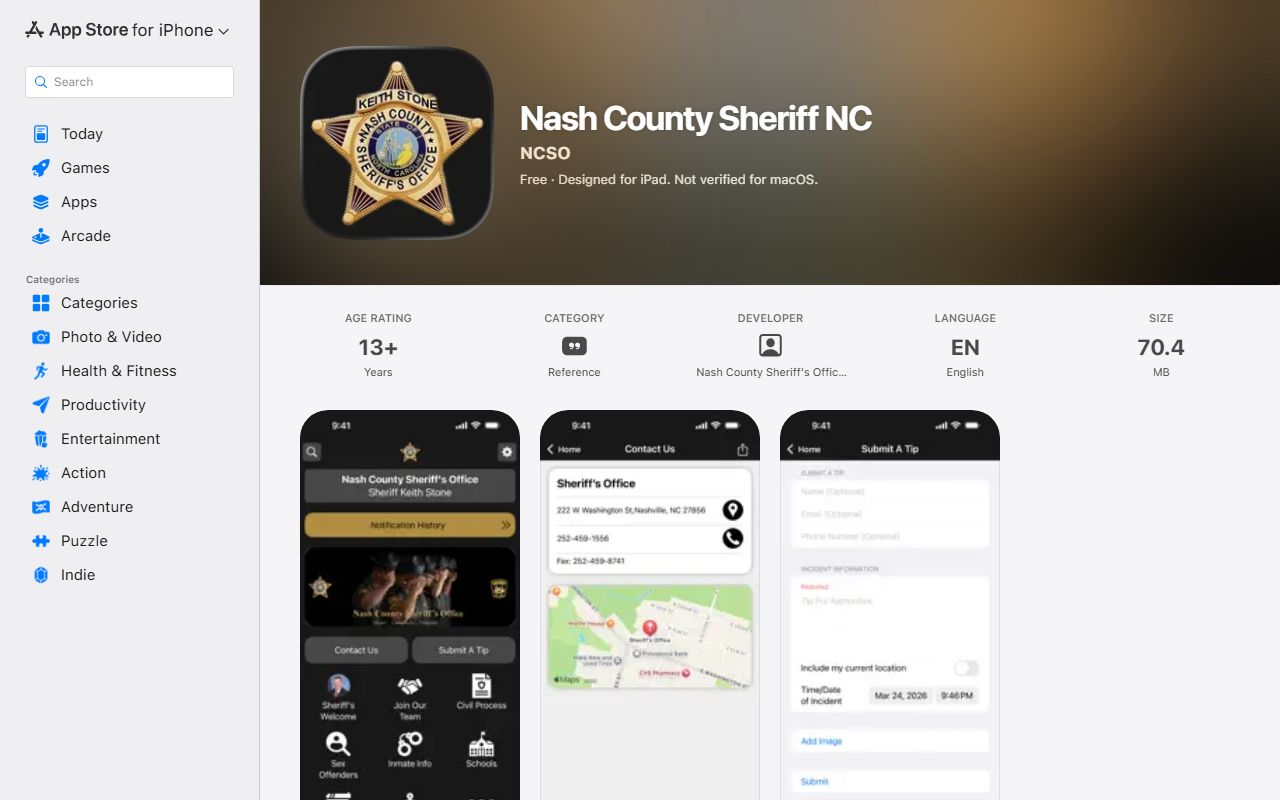
The official app-store language does not show an inmate lookup or warrant search inside that app, so it should be treated as a tip and communication channel, not a replacement for court or jail records.
Nash County Charge Status Terms
Charge status can change after arrest. A charge can be pending at the first setting, amended by the prosecutor, reduced as part of a plea, dismissed, or replaced by another charging document. One arrest can produce several charges, and each charge can have its own status. The safe way to read a court charge record is to check the charge list, then the docket events, then the disposition and judgment fields.
| Status | What It Means |
|---|---|
| Pending | The charge has not reached a final court outcome. |
| Amended | The charge language or offense level changed after filing. |
| Reduced | The prosecution moved forward on a lesser charge or agreed outcome. |
| Dismissed | The charge was ended without a conviction on that charge. |
| Not guilty | The charge ended in a finding that did not convict the defendant. |
| Guilty | The charge ended in a conviction by plea, finding, or verdict. |
Charge Records vs Convictions
Being charged is not the same as being convicted. A Nash County arrest record may describe why a person was arrested. A court charge record may show what was filed in court. The criminal case record later shows whether the charge was dismissed, reduced, amended, tried, pleaded, or sentenced. A background search that reads only the arrest or charge field can miss the most important part of the record.
| Point | Charge | Conviction |
|---|---|---|
| Meaning | An allegation filed or pursued in court. | A final guilty outcome. |
| Proof level | Accusation and probable cause context. | Guilty plea, finding, or verdict. |
| Where to verify | Charge list, warrant, indictment, or docket entry. | Disposition, judgment, sentence, and costs. |
| Can be removed | May qualify for expunction if dismissed or not guilty. | Only qualifying convictions may be expunged under statute. |
Sheriff, Clerk, and DA Channels
Each office answers a different part of the arrest-to-charge chain. The Sheriff's Office handles enforcement records, tips, civil process, courthouse security, warrants or orders for arrest service, patrol, investigations, and detention functions. The Detention Facility handles current custody questions. The Clerk of Superior Court handles the court file, court dates, certified copies, background searches, and older file questions. The District Attorney handles prosecution decisions once the State is pursuing criminal charges in court.
| Need | Channel | Research-supported contact |
|---|---|---|
| Charge filed in court | NC eCourts Portal or Clerk of Superior Court | Clerk phone (252) 220-3000. |
| Custody status | Nash County Detention Facility or VINE | Detention phone 252-459-1536. |
| Arrest or sheriff record | Nash County Sheriff's Office | General inquiries 252-459-4121. |
| Prosecution status | District Attorney, Prosecutorial District 8 | Nash contact directory lists (252) 212-3110. |
| Appointed counsel status | Clerk and NC Indigent Defense Services | IDS directs Nash County counsel-status questions to the clerk. |
The Rocky Mount Police page points residents to its mobile app for anonymous tips and public safety alerts. The Rocky Mount PD app listing supports anonymous tips, crime alerts, and agency information for the city police context.
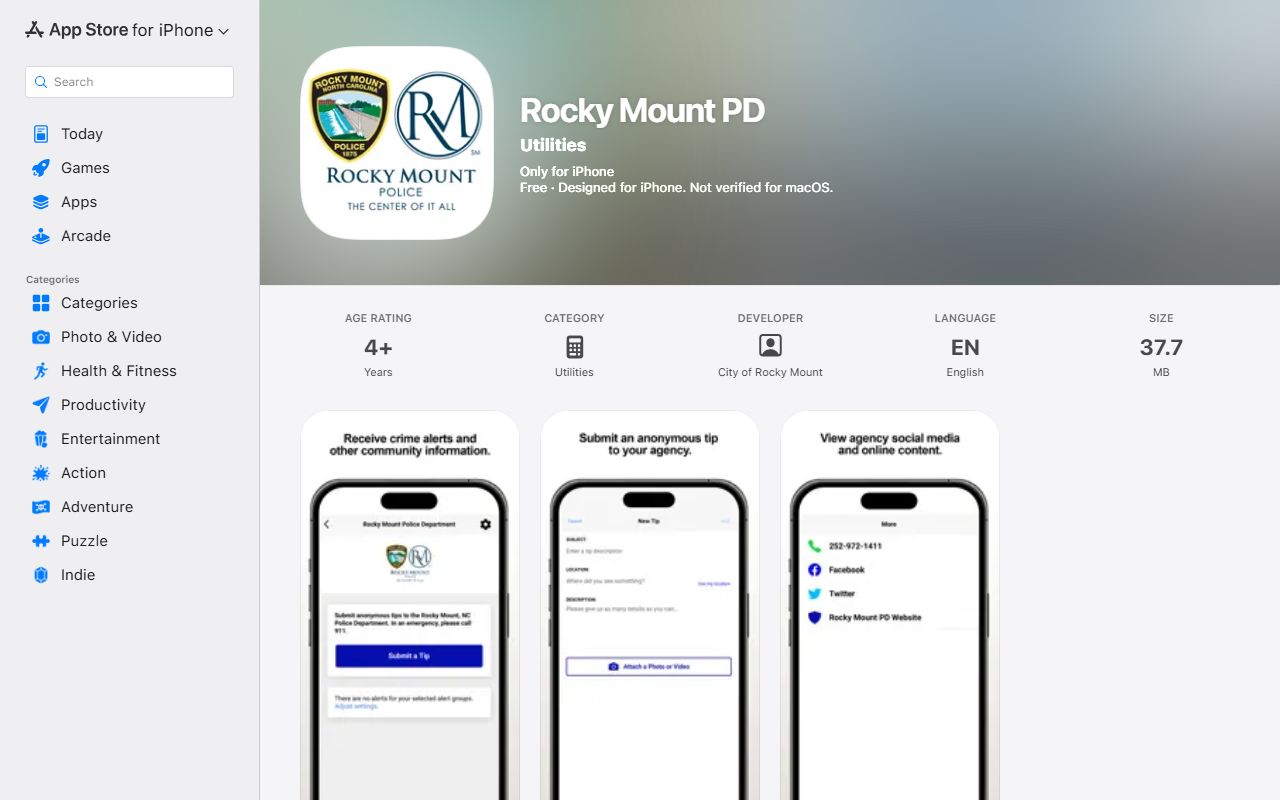
That app is useful for tips and alerts, but the official listing does not present it as a court charge lookup tool.
The Rocky Mount PD Google Play listing also points to public safety alerts and agency content.
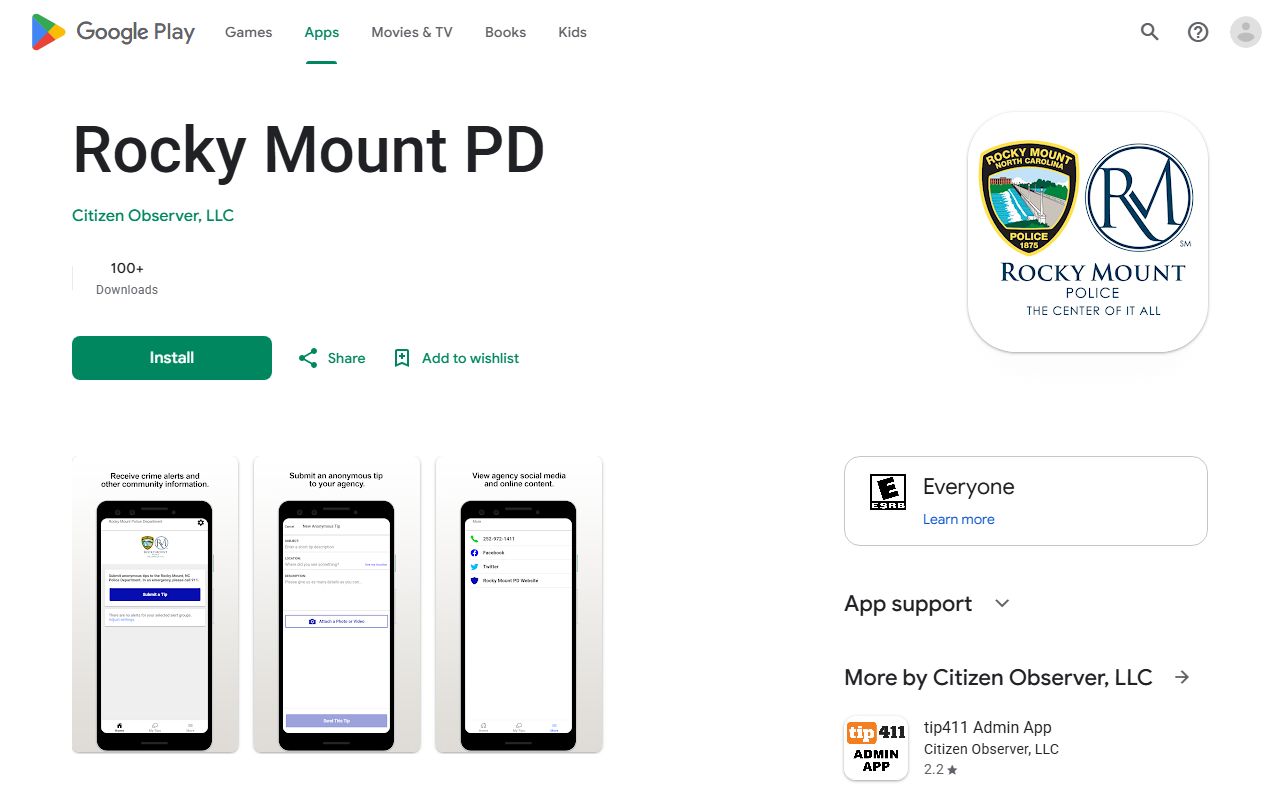
Use official court and clerk sources for filed charges even when local police tools provide alert or tip functions.
Public Access to Arrest and Charge Records
North Carolina public-record law and court-record law both affect arrest and charge access. G.S. 132-1 defines public records broadly. G.S. 132-6.2 addresses copy access and lawful fees. G.S. 7A-109 requires clerks to maintain court records, files, dockets, and indexes, and allows inspection during regular hours unless access is prohibited. The result is broad public access to many adult court charge records, but not unlimited access to every law enforcement detail or confidential court file.
For statewide correction history after conviction, NC DAC searches state prisoners, probationers, and parolees, not county jail inmates. For court-file searches and background checks, use the county clerk. For sheriff records or booking details not online, use the Sheriff's Office subject to redaction and confidentiality. For court dates or charge status, use Portal and the clerk.
Note: A public charge entry may omit sealed details, victim data, protected identifiers, and juvenile information.
Juvenile Arrest Records and Charges
Juvenile records require special care. Juvenile abuse, neglect, and dependency court records are confidential under G.S. 7B-2901, and juvenile delinquency records have separate confidentiality rules. Public pages should not imply that a name search will reveal juvenile files. Access is generally limited to parties, attorneys, agencies, and court-authorized persons. If the matter involves a minor, ask the clerk or counsel about the correct legal route rather than assuming an adult public-record process applies.
The official juvenile delinquency confidentiality statute is G.S. 7B-3000.
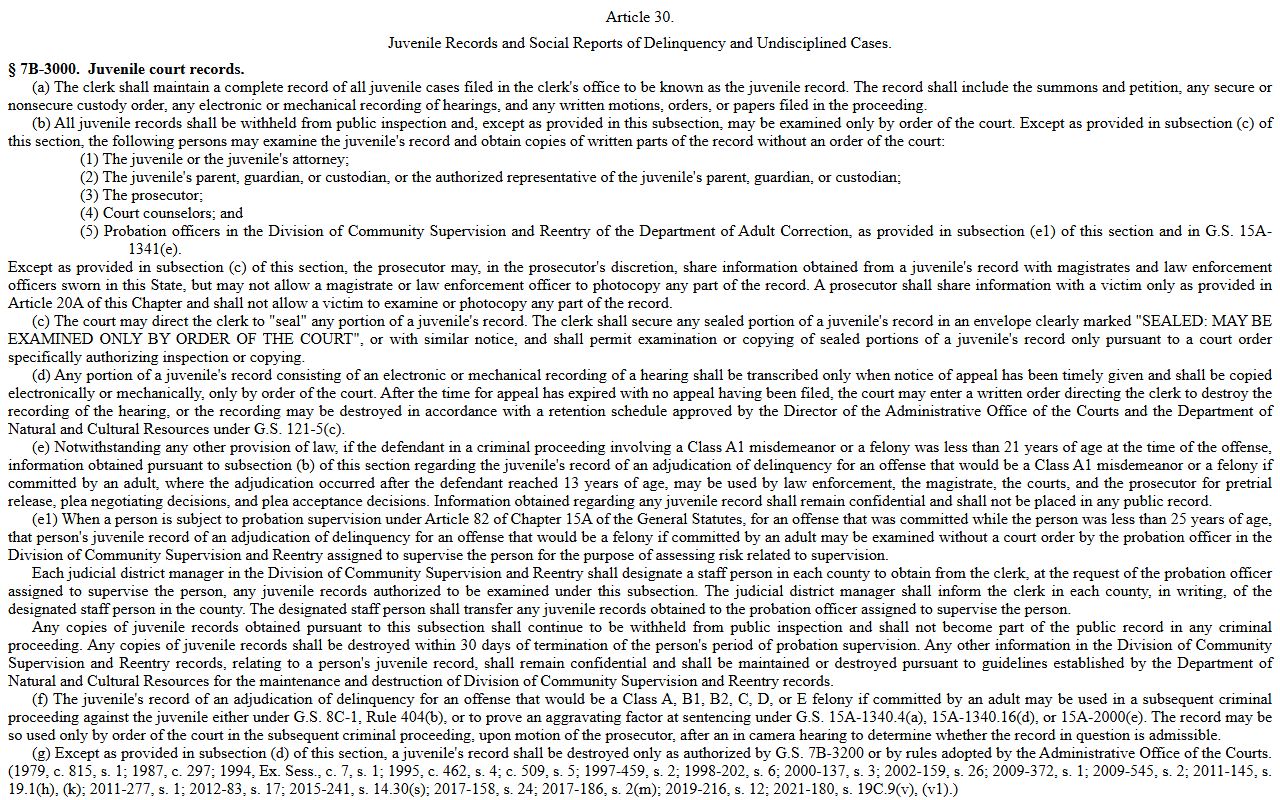
That statute is why juvenile charge information is treated differently from an adult criminal charge record in Nash County court searches.
Sealed or Expunged Charge Records
Sealed and expunged charge records are restricted from ordinary public access. Expunction can remove a criminal charge or conviction from public records and seal or destroy state records of the arrest, charge, or conviction. Dismissed charges and findings of not guilty are addressed by G.S. 15A-146. Certain nonviolent misdemeanor and felony convictions are addressed by G.S. 15A-145.5 and include waiting periods and eligibility rules. A person seeking expunction in Nash County generally files the correct AOC petition in the county where the charge or conviction occurred.
| Point | Sealed charge | Expunged charge |
|---|---|---|
| Public search | Hidden from ordinary public view. | Should not appear in ordinary public searches after the order is processed. |
| How it happens | By law or court order. | By petition and court order under expunction statutes. |
| Common reason | Juvenile, confidential, safety, or court-ordered restriction. | Dismissed, not guilty, or qualifying nonviolent conviction. |
| Where to start | Clerk or court with authority over the file. | Clerk in the county of the charge or conviction. |
Important: The clerk can explain forms and filing steps, but eligibility questions may require legal advice.