
Search Nash County Court Records
The main online starting point is the NC eCourts Portal. Nash County uses this statewide system for Smart Search, Search Hearings, Make Payments, and NC Judgment Search. Smart Search is the broad case lookup tool for public case information in civil actions, criminal actions, nonconfidential special proceedings, and estates. Search Hearings is better when the goal is a court date, courtroom, judge, or calendar event. NC Judgment Search shows judgment index entries and then points users back to Smart Search for fuller case detail.
The Portal is useful, but it is not the only access channel. Public users may need JavaScript, cookies, a supported browser, and CAPTCHA checks. Name searches can pull results from other counties if the location filter is not set to Nash County. For full files, certified copies, complete background checks, older paper records, or documents that do not display online, the Nash County Clerk of Superior Court remains the records office.
The NC Judicial Branch Nash County page is the official county landing page for court services and links.
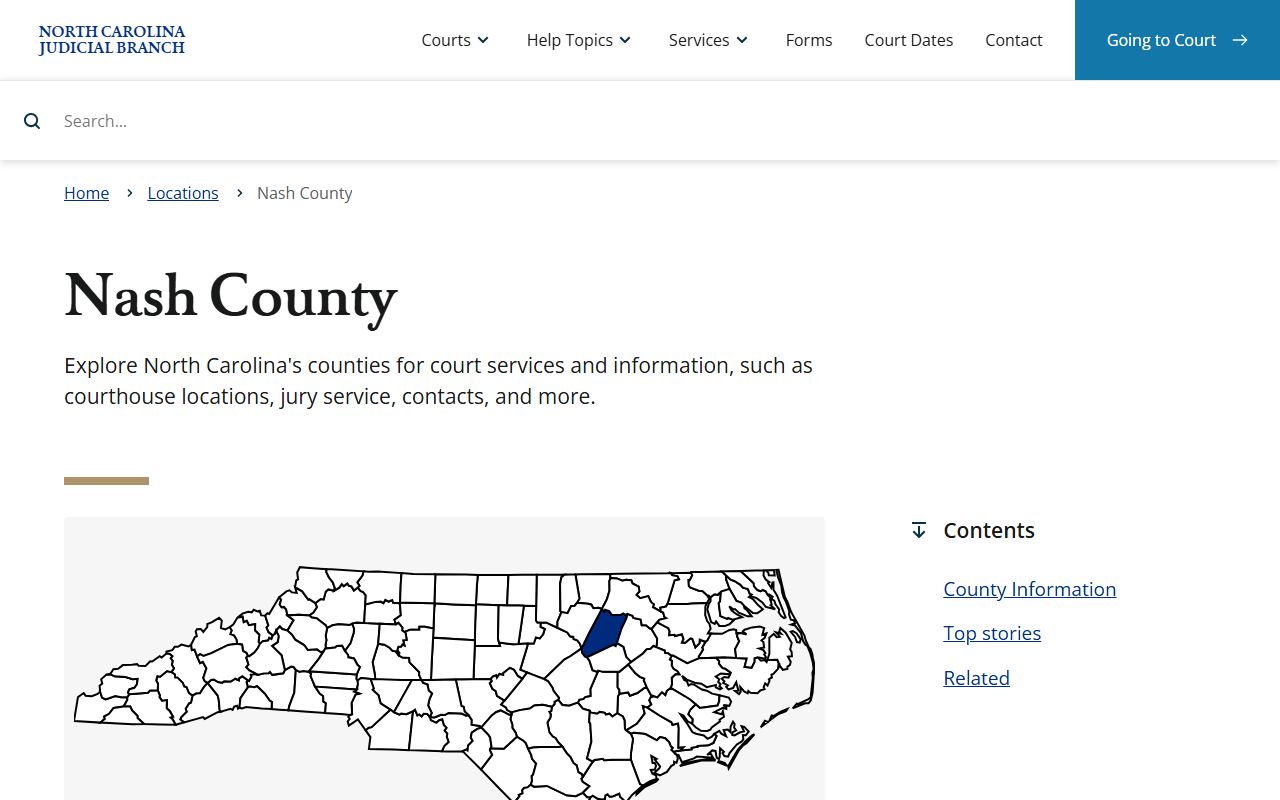
That county page is the safest way to move from Nash County court records to calendars, payments, local forms, disability accommodation, and interpreter services without leaving the official court system.
- Open the Portal or the Nash County Judicial Branch page and choose the search tool that matches the task.
- Use Smart Search for case information, including civil, criminal, estate, and special proceeding records.
- Filter by Nash County under location or general options before relying on a name search.
- Use a full case number when possible, or follow the Portal wildcard rules for partial case and name searches.
- Use Search Hearings for a court date, and use NC Judgment Search for judgment index entries.
- Contact the Clerk of Superior Court when the Portal result is incomplete, old, sealed, restricted, or needs certification.
Nash County Court Search Fields
The Portal training materials describe several fields that matter for Nash County court records. A case number is the cleanest search key. Party names are common but less precise, especially in a statewide database. Hearing searches add attorney, bar number, judicial officer, and courtroom fields because a calendar event may be easier to find by who is appearing or where the session is set.
| Field | Use | Format Notes |
|---|---|---|
| Case number | Find a known court file | Portal training allows at least four characters plus an asterisk for partial case-number searches. |
| Party name | Search by person or party | Wildcard guidance uses at least three last-name characters plus an asterisk and at least one first-name character plus an asterisk. |
| Business name | Find entity parties | Training supports at least four characters plus an asterisk. |
| Location | Narrow results to Nash County | Use this filter because the Portal is statewide. |
| Citation number | Find traffic and infraction matters | Useful for traffic court dates and payments. |
| Attorney or bar number | Find hearings | Available in hearing search rather than every case search. |
| Judicial officer or courtroom | Find calendar events | Best for hearing and docket searches. |
Nash County Courthouse and Clerk
The Nash County Courthouse is at 234 W Washington St, Nashville, NC 27856. The NC Judicial Branch lists the mailing address as Nash County Courthouse, PO Box 759, Nashville, NC 27856, and the main courthouse phone as (252) 220-3000. The Clerk of Superior Court uses that court campus for Superior Court, District Court, estates, special proceedings, court-file access, divorce judgments, background searches, copy requests, public terminals, and payment routing.
The Nash County Courthouse page gives the public courthouse address and hours.
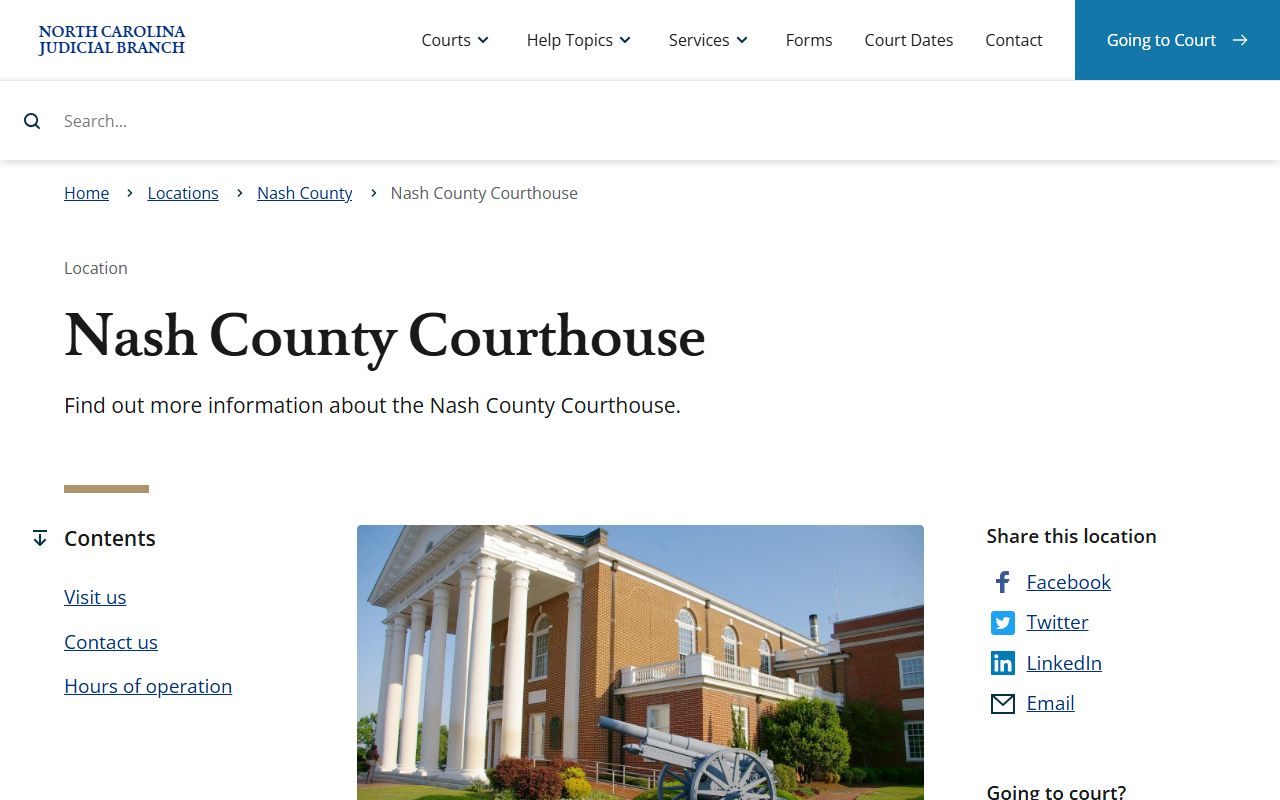
Use the courthouse page before an in-person Nash County court records visit because courthouse hours vary by lunch break and Thursday afternoon reopening time.
Nash County Courthouse
234 W Washington St
Nashville, NC 27856
(252) 220-3000
Monday-Friday with posted lunch closures
Clerk of Superior Court
Nash County Courthouse
PO Box 759
Nashville, NC 27856
(252) 220-3000
Nash County Register of Deeds
120 W. Washington Street, Suite 3030
Nashville, NC 27856
(252) 459-9836
Marriage and vital records
Nash County Court System
North Carolina has a unified General Court of Justice, so Nash County does not run a separate county court system. Local trial work is divided between Superior Court and District Court, with the elected Clerk of Superior Court serving as recordkeeper. Superior Court District 8A handles felony criminal cases and civil cases above the District Court threshold. District Court District 8 handles misdemeanors, infractions, traffic, juvenile, domestic, small claims appeals, and civil claims within the lower monetary range.
The Judicial Branch court structure overview explains the statewide system.
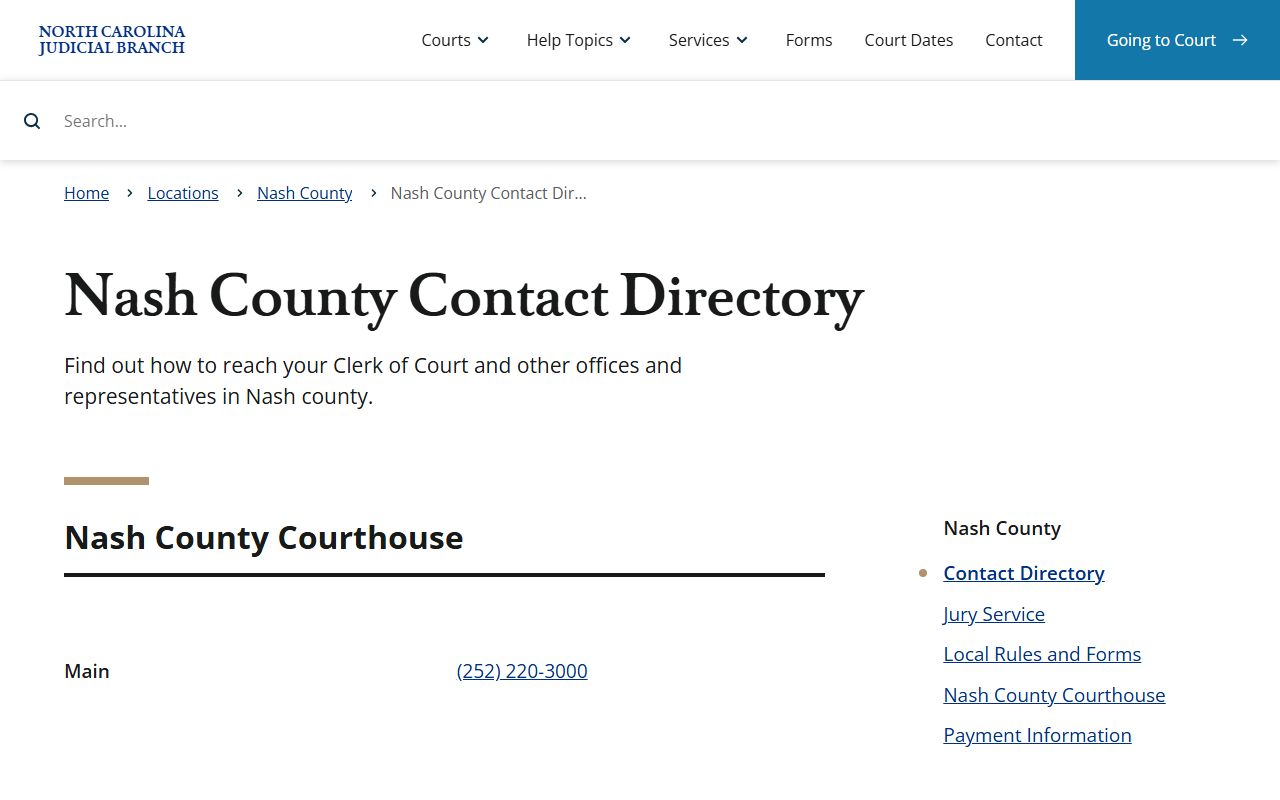
The contact directory matters because Nash County court records may require the clerk, Superior Court judges, District Court judges, magistrates, the District Attorney, or Guardian ad Litem depending on the case type.
| Court or Office | Nash County Role | Contact Point |
|---|---|---|
| Superior Court District 8A | Felonies and civil cases over $25,000 | Nash County Courthouse, judges (252) 220-3016 |
| District Court District 8 | Misdemeanors, infractions, traffic, juvenile, domestic, and lower civil cases | District Court Judges (252) 206-3012 |
| Magistrates | Small claims, summary ejectment, warrants, and pretrial release functions | Nashville (252) 220-3019; Rocky Mount (252) 212-3119 |
| Clerk of Superior Court | Case files, estates, special proceedings, copy requests, and background searches | (252) 220-3000 |
| District Attorney | State criminal prosecutions in Prosecutorial District 8 | (252) 212-3110 |
Case flow: Magistrate or District Court start › District Court or Superior Court case track › disposition or judgment › North Carolina Court of Appeals when an appeal is allowed.
Nash County Court Record Types
Nash County court records include civil complaints and judgments, criminal case files, court charge records after arrest, family and domestic files, traffic citations, judgments and liens, estates, and special proceedings. The Clerk of Superior Court is the local record office for court files, while the Register of Deeds handles marriage certificates, birth and death records, deeds, and many land-related filings. The sheriff handles law-enforcement and detention records, and NC DAC handles state prison, probation, and parole offender records.
The NC eCourts Portal is the statewide public search point for many public court categories.
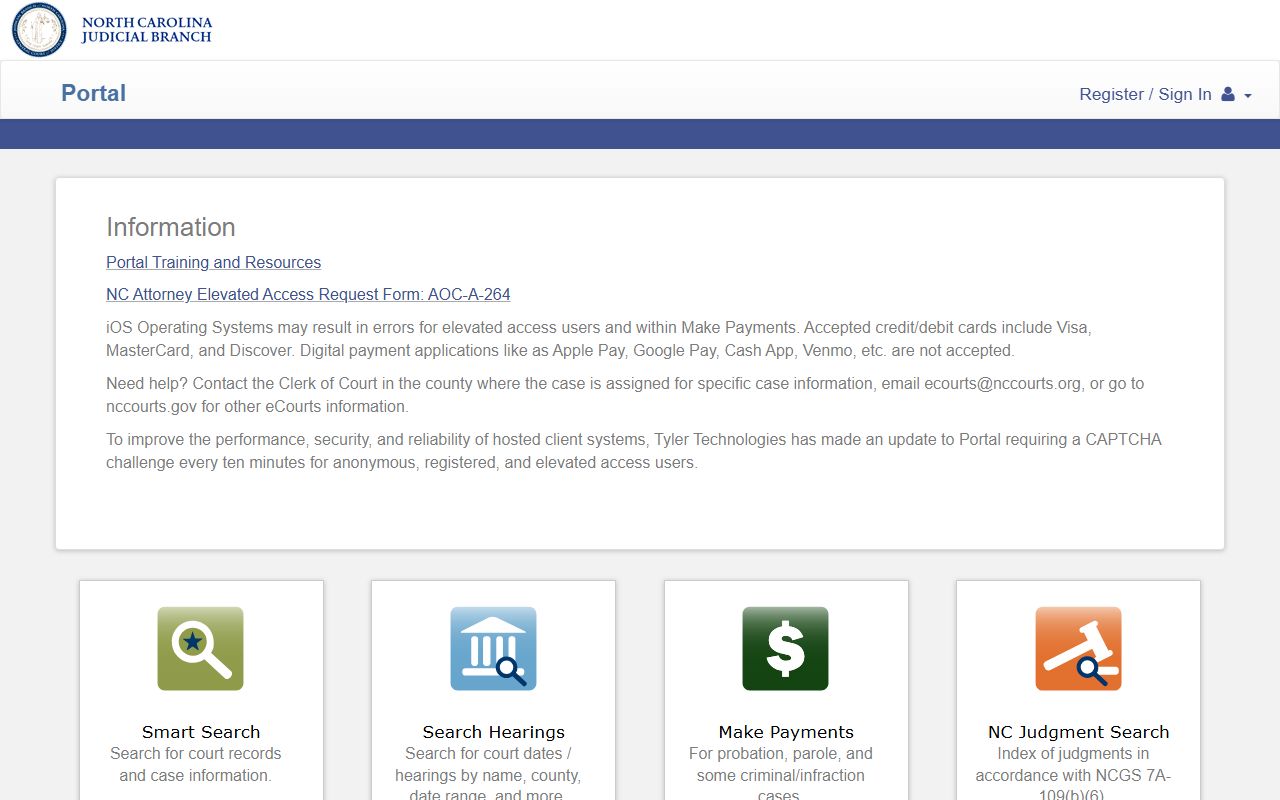
Portal categories help separate Nash County civil, criminal, estate, special proceeding, hearing, judgment, and traffic work before a clerk copy request is needed.
- Civil records: complaints, answers, motions, orders, judgments, liens, dismissals, settlements, and appeal notices.
- Criminal court records: charges, appearances, bonds, pleas, motions, dispositions, judgments, sentences, costs, and probation terms.
- Family records: divorce, custody, child support, equitable distribution, domestic violence protective orders, and related motions.
- Estates and special proceedings: wills, estate administration, letters, inventories, accountings, guardianships, and related clerk orders.
- Traffic records: citation number, charge, officer or agency, court date, waiver or payment status, disposition, and failure-to-appear consequences.
- Judgments: judgment index entries with case number, disposition status, index date and time, parties, and comments.
What Nash County Records Show
A public Nash County court record may show the case number, county, division, case category, filing date, disposition date, status, parties, attorneys, charge or claim, statute reference, bond or pretrial release details, hearing dates, courtroom, judicial officer, event entries, judgment, fines, fees, restitution, and probation-related obligations. Public views may not show every document image, sealed event, confidential detail, or protected identifier.
| Field | What It Shows |
|---|---|
| Case number | The unique court file identifier used by Portal and the clerk. |
| Filing date | When the case, charge, petition, or claim entered the court system. |
| Parties | Names and roles such as plaintiff, defendant, petitioner, respondent, or decedent. |
| Hearings | Dates, location, courtroom, and sometimes judicial officer information. |
| Disposition | The outcome, such as dismissed, guilty, not guilty, judgment entered, or closed. |
| Costs or sentence | Financial obligations, probation, restitution, or sentence terms when public. |
- Docket
- The running list of filings, hearings, and case events.
- Disposition
- The court outcome for a charge, claim, petition, or judgment.
- Certified copy
- An official copy with clerk certification for legal use.
- Special proceeding
- A clerk-handled case type often tied to estates, property, or guardianship matters.
Nash County Court Access Laws
North Carolina public access starts with broad public-records principles and court-specific recordkeeping statutes. For Nash County court records, the key practical rule is simple: public case information may be searched through Portal when available, while official copies, older files, background searches, and restricted-document questions should go through the Clerk of Superior Court. Judicial Branch administrative records that are not county case files may use the NCAOC public-records form.
The Judicial Branch public record request page explains which requests belong with NCAOC and which belong with local offices.
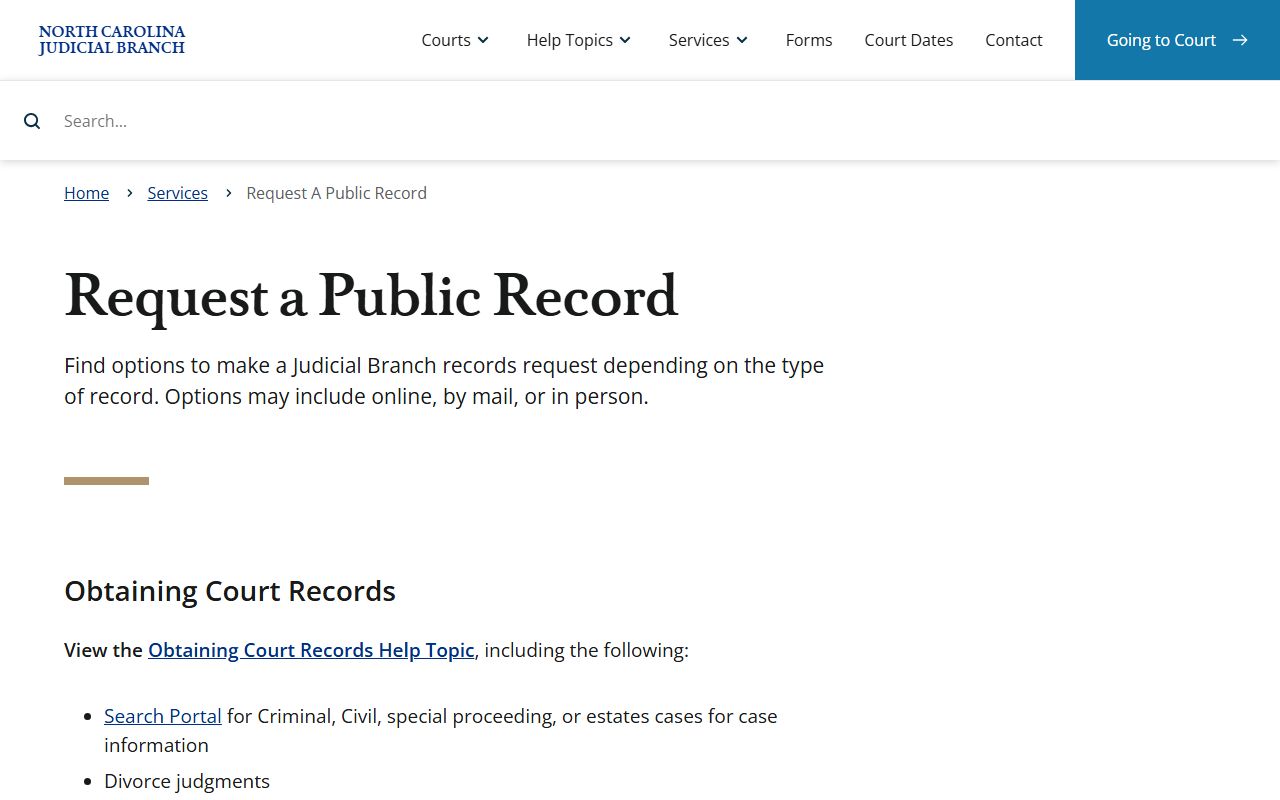
That routing note is important because NCAOC says it is not the custodian for county case documents, case information, marriage certificates, birth certificates, or background checks.
Key statutes:
G.S. 132-1 defines public records for North Carolina public agencies.
G.S. 132-6.2 addresses copies and copy fees for public records.
G.S. 7A-109 requires clerks to maintain court records, dockets, files, and indexes.
G.S. 7B-3000 keeps juvenile delinquency record information confidential.
Restricted Nash County Records
Some Nash County court records are not open through ordinary public search. Juvenile delinquency, juvenile abuse, neglect, and dependency files are confidential under Chapter 7B. Adoption files are not routine public files. Mental health commitment records are sensitive and restricted. Sealed and expunged criminal records should not appear in ordinary public views after the court grants relief. Protected personal identifiers, victim safety details, minor information, financial account data, and protected addresses may be redacted even when the broader case is public.
Expunction is the main court process for removing or sealing certain criminal records. Dismissed charges and findings of not guilty use G.S. 15A-146. Certain nonviolent misdemeanor and felony convictions use G.S. 15A-145.5, with eligibility rules and waiting periods. A person usually files in the county where the charge or conviction occurred, serves required parties such as the District Attorney when the form requires it, and waits for court review.
Note: A missing Portal result does not prove no case ever existed, because old, sealed, confidential, or non-digitized files may require clerk review.
Nash County Court Dates
Court-date searches can use the Portal hearing search or the public calendar tools. Nash County has separate filtered calendar links for civil and criminal sessions. These calendars are useful for checking hearing dates, but they do not replace the full case file. A court date may change because of continuance, local rules, weather, administrative order, or judge action, so the clerk or court coordinator remains the final confirmation point for a specific appearance.
The Nash County civil calendar and Nash County criminal calendar show official calendar access.
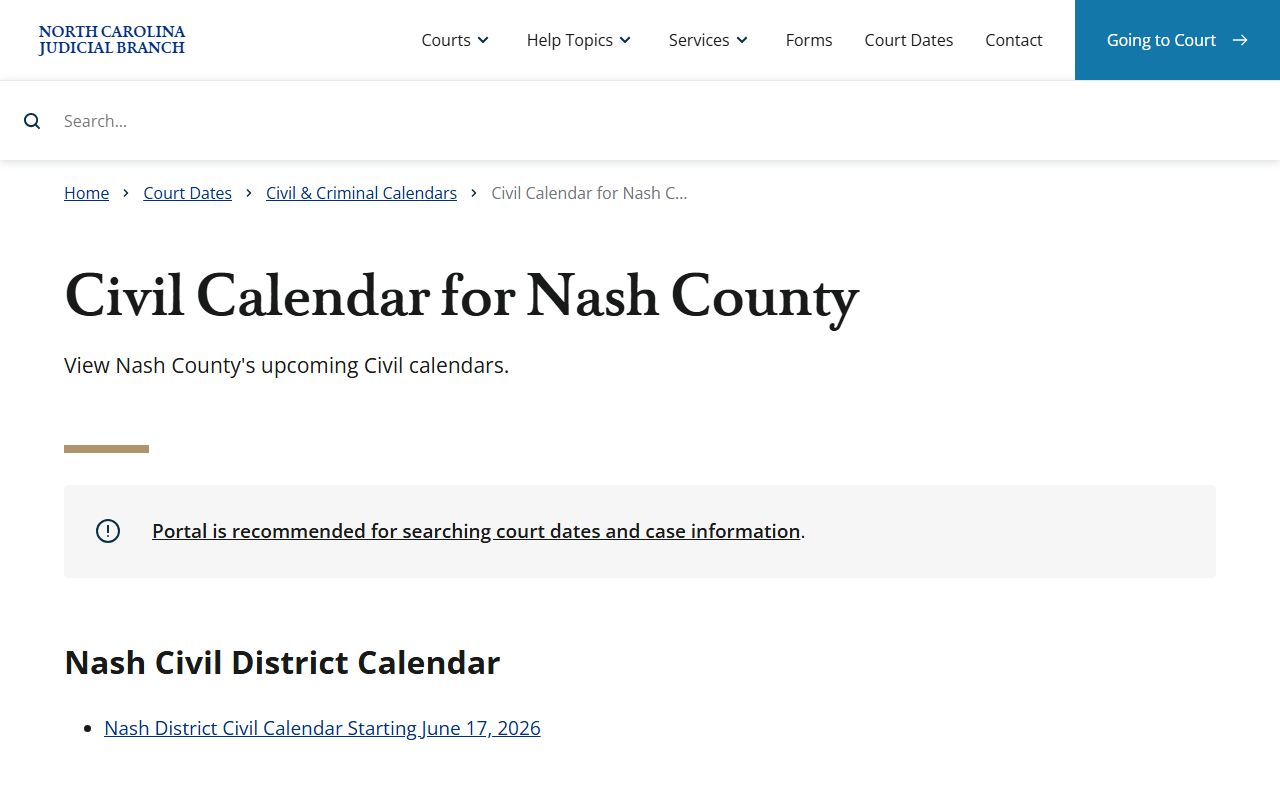
Civil calendars help users separate scheduled hearings from full Nash County court records, which may require Portal or clerk access.
The criminal calendar source uses the same court-calendar system.
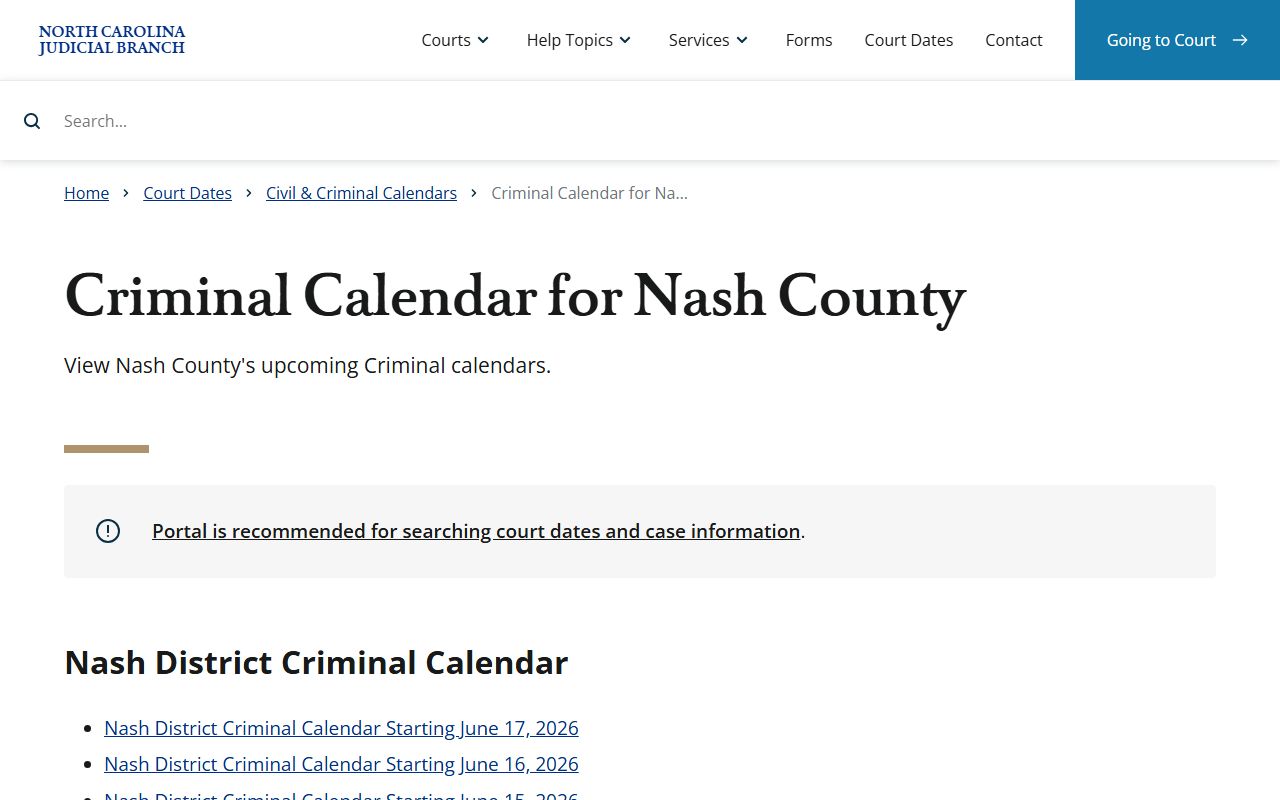
For criminal matters, calendar entries should be read with the case file because a court date does not by itself show the final plea, dismissal, verdict, or sentence.
Nash County Sheriff and Jail
The Nash County Sheriff's Office is at 222 W. Washington St., Nashville, NC 27856, directly by the courthouse campus. The official sheriff page names Keith Stone as sheriff and lists the general non-emergency number as 252-459-4121. The Nash County Detention Facility is at the same West Washington Street campus and uses phone 252-459-1536. County pretrial detainees and short-term local inmates are handled there, while state prison, probation, and parole records use NC DAC systems.
The Nash County Sheriff's Office page is the official sheriff contact source. The sheriff, clerk, and courthouse are close together, but they hold different Nash County records, so routing matters before a visit.
| Need | Start Here | Important Limit |
|---|---|---|
| County custody status | Nash County Detention Facility, 252-459-1536 | No official public county jail roster was found in the research. |
| Custody notification | North Carolina VINE | Notification service, not a certified court record. |
| State prison or probation | NC DAC offender searches | Does not include county jail information. |
| Most wanted information | Sheriff's Most Wanted page or 252-459-4121 | Not a complete active-warrant database. |
Nash County Warrants and Charges
No official full Nash County active-warrant search portal was found in the research. The sheriff maintains a Most Wanted Suspects page, but it is not a complete warrant list. The Patrol Division serves criminal papers including warrants and orders for arrest, magistrates handle warrants and pretrial release functions, and the Clerk of Superior Court keeps related court files. A warrant search should therefore use a chain of official channels rather than a single third-party result.
For charges after arrest, distinguish the arrest or booking event from the court charge and the full criminal case file. Law enforcement may make the arrest or seek a warrant. The District Attorney for Prosecutorial District 8, Jeffrey Marsigli, decides how state criminal prosecutions proceed in court, including dismissals, reductions, pleas, indictments, and trial settings. The full case record later adds motions, pleas, disposition, judgment, sentence, costs, and probation terms.
Note: The Nash County Sheriff NC app and Rocky Mount PD app are documented as tip, alert, and public-safety communication tools, not verified warrant or inmate lookup databases.
Nash County Marriage Divorce Probate
Marriage records and marriage licenses are not held by the Clerk of Superior Court. They are handled by the Nash County Register of Deeds at 120 W. Washington Street, Suite 3030, Nashville. The Register's office is the source for marriage licenses, certified marriage certificates, birth and death certificates, deeds, plats, powers of attorney, assumed names, military discharges, and notary records. Divorce judgments, by contrast, are court records from the Clerk of Superior Court in the county where the divorce was granted.
Estate and probate work in Nash County is handled through the Clerk of Superior Court rather than a separate probate court. Nonconfidential estates and special proceedings may be searched in Portal, but official copies and filing questions go to the clerk. Small estate affidavits have dollar thresholds and timing rules, including a 30-day waiting period after death under the researched form guidance.
| Record | Office | Access Route |
|---|---|---|
| Marriage license | Register of Deeds | In office, 8 AM-4 PM issuance hours, $60 fee. |
| Certified marriage certificate | Register of Deeds | In person, mail, or Permitium vendor, $10 county certificate fee. |
| Divorce judgment | Clerk of Superior Court | Clerk copy request in the county where the divorce was granted. |
| Estate file | Clerk of Superior Court | Portal for public index information, clerk for official copies and filings. |
Nash County Traffic Records
Traffic cases in Nash County are District Court matters, not a separate county traffic court. Some citations are infractions, while others are misdemeanors or more serious criminal traffic matters. A court traffic record is different from a state driver record: the court record shows the citation case, court date, waiver or contest status, disposition, costs, and failure-to-appear history; the state driver record is maintained outside the court system and reflects licensing consequences.
The NC eCourts Portal training resources explain Portal search and payment tools.
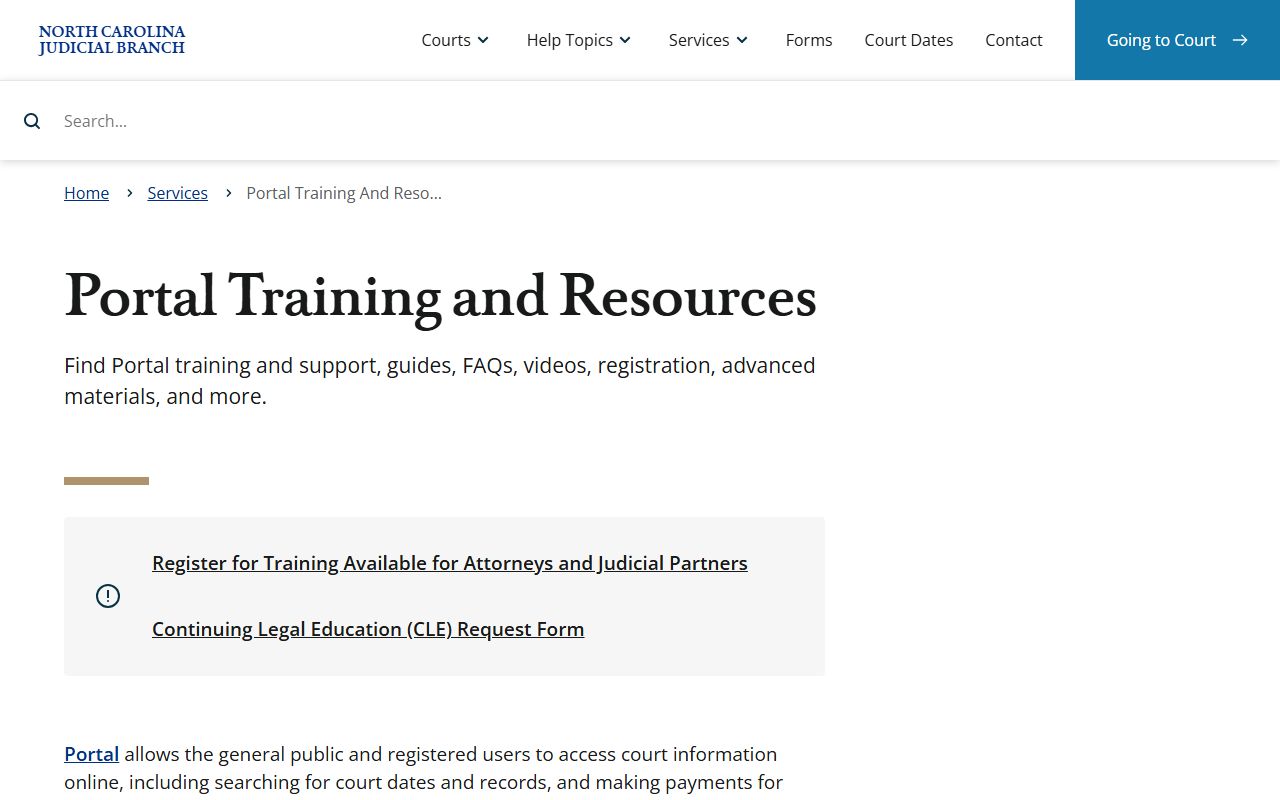
Payment tools should be used only after confirming whether the citation can be waived or handled online, because some traffic cases require a court appearance.
| Payment Channel | Accepted Method | Local Note |
|---|---|---|
| Money order or certified check | No cash or personal checks; include citation number. | |
| In person | Cash, credit/debit plus fees, money order, certified check | Cashier's Office in the courthouse or Community Corrections Facility in Rocky Mount. |
| Online | Credit/debit card plus fees | Portal payment notice rejects digital wallets such as Apple Pay, Google Pay, Cash App, and Venmo. |
Nash County Local Rules
Nash County local rules and forms add local procedure to the statewide court structure. The official local rules page includes Superior Court, District Court, Domestic Court, and Juvenile Court rules and forms. Examples in the research include Civil Superior Court Rules, Superior Court Civil Calendar Rules for Nash County, motions for continuance of criminal cases and infractions, family financial settlement procedures, juvenile court rules, and local forms such as a District Court Notice of Hearing and Request for Peremptory Setting.
The Nash County local rules and forms page is the official source for these materials.
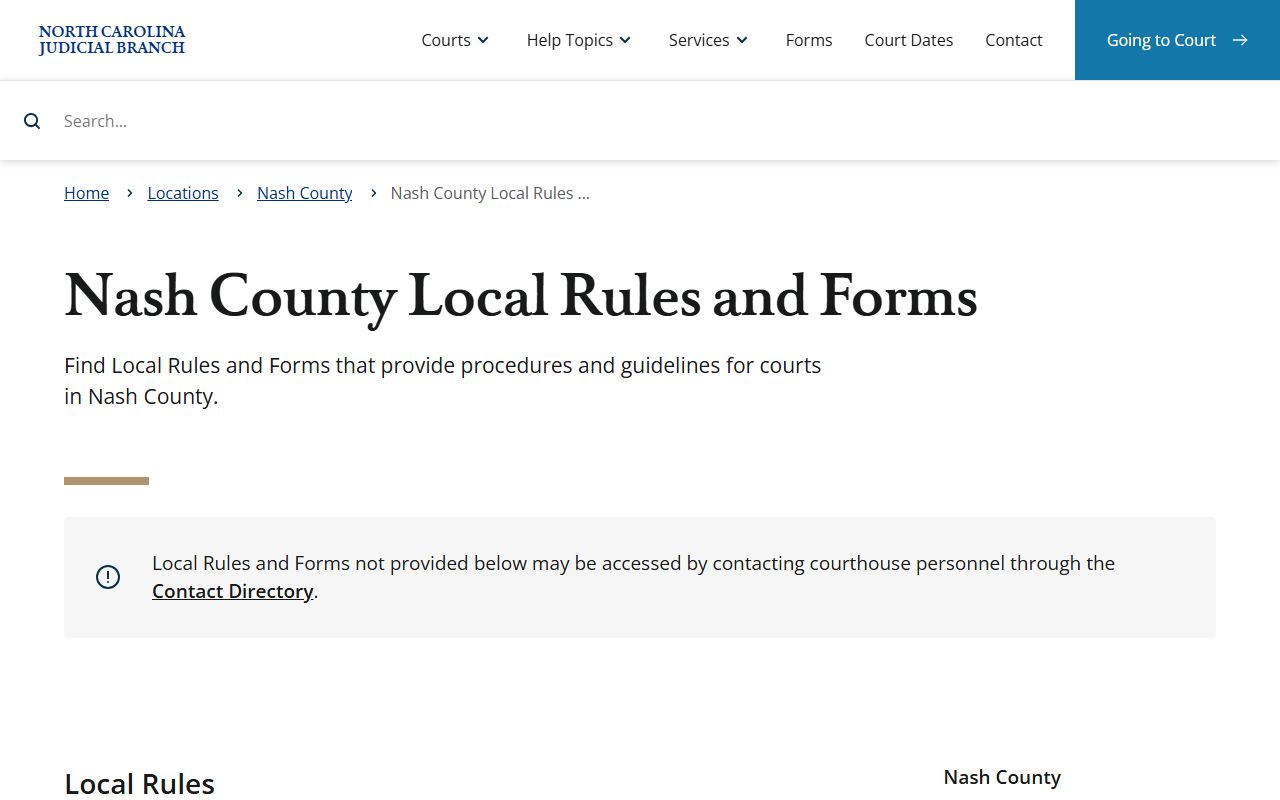
Local rules are especially important when a Nash County court record shows a continuance, domestic setting, juvenile proceeding, or civil calendar event.
Nash County Court History
Nash County's modern records sit inside a statewide court system, but the record offices reflect a long local history. The Register of Deeds says real estate records date back to 1777, and the NC Judicial Branch notes that North Carolina Superior Courts were established in 1777. That helps explain why old land, estate, marriage, and court references may sit in different archives rather than in one modern Portal result.
The major current change is digital access through eCourts and Portal. Nash County records now use statewide tools for case information, hearing search, payments, judgment search, and eFiling-related workflows. Still, the Clerk of Superior Court remains the office for official copies, background searches, and courthouse access.
Nash County Court Records FAQ
Can I search Nash County court records online?
Yes. Use the NC eCourts Portal for public case information, hearing search, payments, and judgment indexes. Use the Clerk of Superior Court for certified copies, older files, complete background checks, or records not shown online.
Who keeps Nash County court files?
The Clerk of Superior Court keeps Superior Court, District Court, estate, special proceeding, divorce judgment, and court-file records. The Register of Deeds keeps marriage certificates and most vital records.
Is there a complete Nash County warrant search online?
No complete official active-warrant database was found in the research. Use the sheriff, magistrates, clerk, Portal case records, and Most Wanted page as official channels.
Where are Nash County inmates searched?
No official county jail roster was located on the county site. Call the detention facility for local custody questions, use VINE for notifications, and use NC DAC for state prison, probation, and parole records.
Where do I get a certified divorce judgment?
Divorce judgments come from the Clerk of Superior Court in the county where the divorce was granted. Divorce certificates may also be available through NC Vital Records.
Are juvenile court records public?
Juvenile delinquency, abuse, neglect, and dependency records are confidential under North Carolina law. Public searches should not be expected to show those files.